
Upgrading the Storeperson: Meet the Modern Supply Chain Technician
From Clipboards to Code: The Evolution of the Modern Storeperson.
Hey “when I were a lad”,” back in the day” all the old cliches come out to recall the times when we started in a factory serving an Apprenticeship, you had to go through all the usual banter and craic off the skilled men, “go to stores for a long stand” “a storeman’s clip” “ask for a sky hook “.
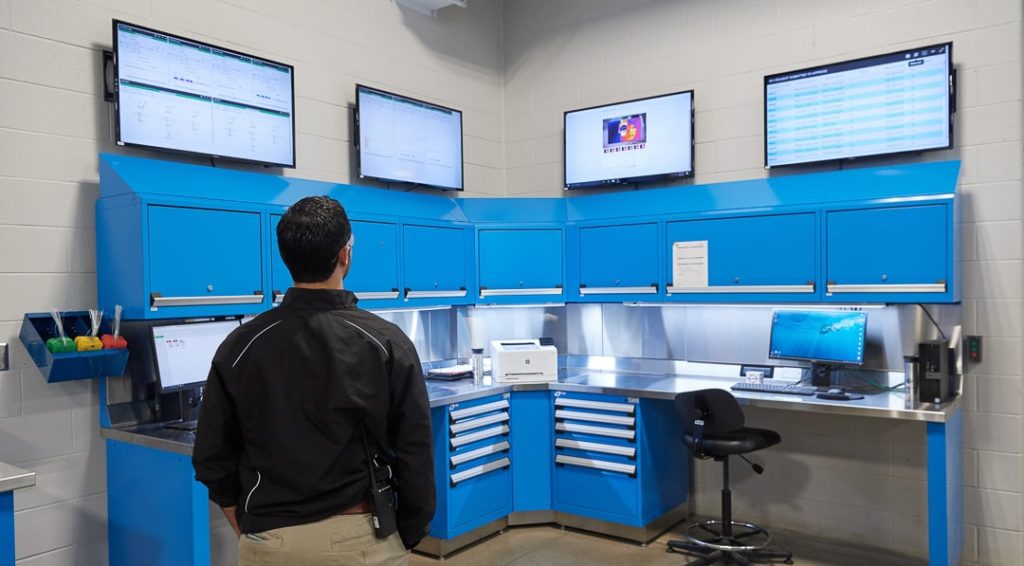
Generally storemen had been on the factory floor, either as a skilled man or maybe an operator who wanted to move up. They relied on memory, grit, and a knack for organization. But as automation takes over the heavy lifting, the ‘tools’ of the trade have fundamentally shifted. The modern Materials Controller is a data-driven technician. They don’t just store the inventory; they optimize it using real-time software, tracking components before they even hit the delivery bay. The role has stepped out of the dark corner of the warehouse and right into the centre of smart manufacturing.
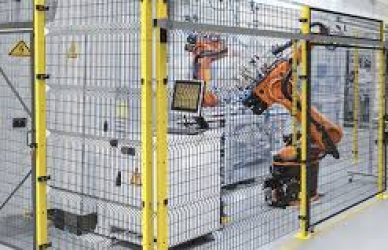
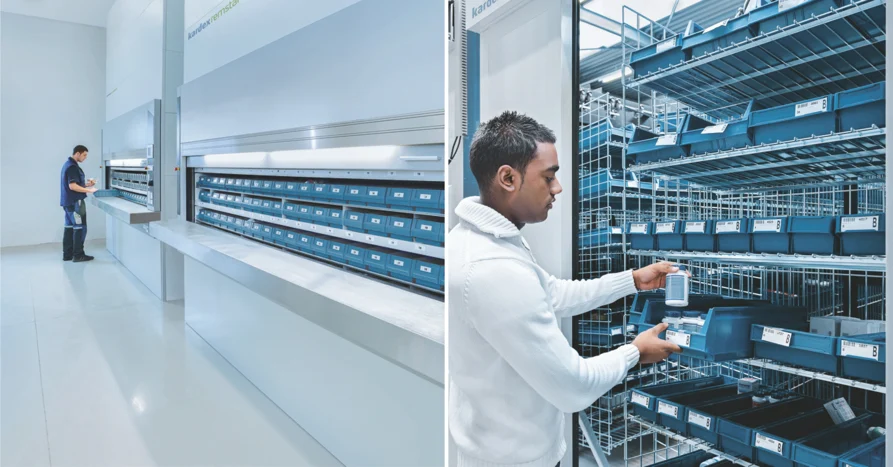
Previously they had known where every single nut, bolt, and casting was hidden—usually because it was all locked in a cage only they had the key to. Fast forward to the present day, and that cage has been replaced by automated vertical carousels and cloud-based inventory systems. The modern storeman isn’t just rummaging through boxes anymore; they are analyzing data streams and programming logistics robots. The banter might still be there, but the job description has had a serious, high-tech upgrade. wanted to move up. Back then, their kingdom was a labyrinth of steel racking, guarded by a dog-eared ledger and a sharp pencil. But if you walk into a modern factory today, that world feels like ancient history. The clipboard has been replaced by a tablet, the ‘long stand’ has been replaced by Automated Guided Vehicles (AGVs), and the storeman has evolved. Today, they aren’t just issuing parts—they are Materials Controllers and Supply Chain Technicians, managing the digital heartbeat of the entire production line.
The Core Conflict: From “Hoarding” to “Orchestrating”
The power if you like of the traditional storeperson came from knowing where things were physically located and having the manual ledger or memory to find them. They were an island of expertise. The Modern Operator: Is an orchestrator. They don’t just “store” things; they manage a data flow. They interact with SAP/ERP systems, oversee automated retrieval systems (AS/RS), and troubleshoot when the robots or software hit a snag. They aren’t guardians of the items; they are guardians of the process.
The Impact of SAP and ERP Systems
With the introduction of these systems: Enterprise Resource Planning (ERP) systems like SAP didn’t just change the stores setup; they completely smashed the traditional warehouse walls. Referring back to the past, before these systems, the factory stores functioned like a siloed island. The storeperson knew what was on the shelves, procurement knew what they had ordered, and production knew what they needed—but they rarely spoke the same language in real time.This system was ripe for modernisation and so here is how SAP and modern ERP systems transformed the stores into the digital nerve centre of the factory:
1. From “Gut Feeling” to Live Data
Historically, a storeperson kept a mental tally or a physical ledger. Reordering happened when a shelf looked empty, or when a production supervisor started shouting for parts. With an ERP system, every single movement—a barcode scan at goods-in, a part issued to a work order, or a component rejected by quality control—is logged instantly. Inventory accuracy jumps from a hopeful 80% to a precise 99%+.
2. Automated Replenishment (MRP)
ERP systems utilize Material Requirements Planning (MRP). The system looks at the production schedule, looks at what is currently on the shelves, calculates the “lead time” it takes a supplier to deliver, and automatically flags when stock is running low. It can even generate purchase requisitions without human intervention. The modern stores team spends less time panic-ordering and more time managing exceptions.
3. Traceability and “Right-First-Time” Logistics
In a modern automated factory, a mistake in the stores can halt a million-dollar production line. ERP systems enforce strict logic:
FIFO/FEFO: The system directs the technician to pick the oldest stock first to prevent shelf-life expiration.
Serial & Batch Tracking: If a component fails on the line, SAP can instantly trace exactly which batch it came from, which supplier delivered it, and what other assemblies contain parts from that same batch.
| The Old Storeman’s Tool | The Modern ERP/SAP Tool | The Operational Impact |
| Paper Pick Sheets | Rugged RF Scanners / Wearable Tech | Eliminates data entry errors; picks are validated in real time against the digital system. |
| Annual Stock Takes | Cycle Counting Modules | No more shutting down the factory for a week to count bolts. The system prompts daily, bite-sized counts based on stock value. |
| The “Secret” Stash | System-Directed Putaway | Parts are assigned optimal, dynamic locations based on size, weight, and frequency of use, maximizing warehouse space. |
A Focus on the Pharmaceutical Stores Transformation
Just to give you a working example and why this modernisation of the stores was so important to all industries but to some industries it was more critical.
In a pharmaceutical manufacturing plant, the engineering parts and maintenance stores (often called the MRO stores—Maintenance, Repair, and Operations) operate under a level of scrutiny that would shock most traditional industries.In this environment, a missing £5 sealing ring or an unlogged bolt isn’t just an inconvenience—it can trigger a compliance disaster, a million-pound batch rejection, or a regulatory shutdown. Here is how we can quantify exactly why SAP, ERP, and the role of a modern Materials Controller are so critical in a pharma maintenance stores setup:
1. The Cost of Downtime: approx £10,000 to £50,000+ Per Hour
Pharmaceutical production lines—whether they are compounding active ingredients, tableting, or sterile filling—are incredibly expensive to run.
The Risk: If a critical pump breaks down on a sterile filling line and the replacement gasket isn’t in the stores (or worse, SAP says it’s there but it can’t be found physically), the line stops.
The Metric: In pharma, unplanned downtime can easily average £0,000 to £50,000 per hour, and for blockbuster drugs, it can skyrocket to hundreds of thousands of dollars. A modern stores technician utilizing an ERP system ensures “critical spares” are 100% accounted for, preventing these catastrophic delays.
2. Batch Forfeiture: The £1,000,000+ Mistake
In manufacturing, if a machine breaks, you usually fix it and resume. In pharma, a breakdown mid-production can ruin the entire batch due to contamination risks or strict temperature/time tolerances.
The Risk: If a batch of biologic medicine or vaccines is compromised because a maintenance part wasn’t available to fix a sudden breakdown, the entire batch must be scrapped.
The Metric: Individual pharma batches routinely carry a value ranging from £500,000 to over £5,000,000. The maintenance storeperson is quite literally guarding the parts that protect millions of pounds in liquid assets.
3. Regulatory Compliance & Traceability (FDA / MHRA)
Pharma is governed by strict GMP (Good Manufacturing Practice) regulations. Every single item that touches the production environment must be fully traceable.
The Risk: If an engineer uses a non-compliant or uncertified part (like a non-food-grade lubricant or a non-certified O-ring) because the stores setup didn’t track the certificate, the regulatory bodies can halt production entirely.
The Metric: Under regulations like FDA 21 CFR Part 11, 100% traceability is required. An ERP system locks this down by forcing the Materials Controller to scan and attach material certificates (COCs) directly to the part profile in SAP. If a part doesn’t have its digital “passport,” the system won’t allow it to be issued to a work order.
4. Calibration and Shelf-Life Expiry (The 0% Error Margin)
Unlike a standard engineering workshop where a bearing can sit on a shelf for a decade, pharma components often have strict shelf lives (especially rubber seals, gaskets, and calibrated instruments).
The Risk: Installing an expired seal that degrades prematurely can contaminate a drug batch with particulate matter.
The Metric: Using FEFO (First-Expired, First-Out) logic via SAP ensures that components with an approaching expiry date are flagged automatically. The modern technician manages this data to guarantee 0% expired parts ever reach the maintenance teams.
| Metric / Focus | Traditional Engineering Stores | Modern Pharma Maintenance Stores |
| Primary Goal | Keep the factory running cheaply. | Protect patient safety, compliance, and uptime. |
| Stock Accuracy Target | approx 90% to 95% (Good enough) | 99.9% to 100% on Critical Spares. |
| Traceability | None, or a paper delivery note. | 100% digital history (Batch No., Manufacturer, Certificate of Conformity). |
| Storage Conditions | Standard ambient racking. | Temperature and humidity-controlled zones (often logged in the ERP). |
So as you can see, this underlines the ultimate justification for why the role has transitioned to a “Supply Chain Technician.” In a pharma setup, the person in the stores isn’t just handing over tools; they are acting as a compliance officer and a financial guardian. A single data entry error in SAP by the stores team can lead to a multi-million pound product recall.and maybe payout liabilities.
Just-In-Time (JIT) Manufacturing
In an automated factory, Just-In-Time (JIT) manufacturing is the ultimate balancing act. The goal is to have raw materials and maintenance parts arrive at the exact moment they are needed on the production floor—minimizing costly warehouse storage space while ensuring the assembly line never starves. Pioneered by Toyota Motors in 1970 it quickly was adopted as the Standards for all supply chains and Industry and evolved in to Lean manufacturing later. Without SAP or a robust ERP system, JIT is practically impossible. With them, it becomes a finely tuned symphony.
Part 1: How ERP Systems Enable JIT
An ERP system serves as the single source of truth, linking the sales forecast, the production schedule, and external suppliers into a tight, automated feedback loop.
Real-Time Demand Pull: Instead of pushing materials onto the factory floor based on guesswork, ERP systems use a “pull” method. When an automated machine completes a batch, it triggers a digital checkpoint. SAP instantly recognizes that inventory has been consumed and calculates exactly when the next batch of materials must arrive.
Supplier Integration (EDI): Modern ERPs don’t wait for a human to draft an email. Through Electronic Data Interchange (EDI), the ERP sends live inventory requirements directly to the supplier’s system. The supplier knows what to ship, how many, and precisely which loading dock to deliver to, often down to a specific 15-minute window.
Dynamic Lead-Time Management: SAP continuously analyzes how long a supplier takes to deliver, transit times, and internal processing speeds. If a supplier delays or a machine speeds up, the ERP dynamically shifts the ordering triggers to keep the JIT chain intact.
Part 2: The Stores Technician’s Role in a JIT Setup
In a traditional setup, a storeperson’s job was largely about physical storage and organization. In a JIT environment, there is very little long-term storage. Therefore, the role of the Materials Controller / Supply Chain Technician shifts from “storing” to velocity and data integrity.
If the ERP is the brain of JIT, the technician is the nervous system. Here is what they actually do:
1. Guarding the “Gate” (Rapid Goods-In Verification)
In JIT, inventory goes straight from the delivery truck to the production line, bypassing the warehouse shelves entirely (often called Cross-Docking).
The Role: The technician must intercept the delivery immediately. Using RF scanners, they scan the incoming barcodes to instantly update SAP. If they delay scanning a critical delivery by even 20 minutes, the ERP remains “blind,” and automated line machinery might shut down assuming the parts haven’t arrived.
2. Micro-Logistics and “Kitting”
Because automated lines move rapidly, engineers and operators don’t have time to walk to the stores to browse for parts.
The Role: The technician uses ERP-generated pick lists to assemble precise “kits”—all the specific tools, fasteners, and components needed for a specific production run or maintenance shift. They stage these kits at specific drop zones or load them onto Automated Guided Vehicles (AGVs) that deliver them directly to the machines.
3. Absolute Zero-Error Data Entry
Because JIT operates with a razor-thin safety buffer, there is zero room for inventory discrepancies.
The Role: If a traditional storeperson miscounted a box of 100 bolts as 90, it didn’t matter much because there were thousands more in the back. In a JIT system, if the technician forgets to log a single defective part being scrapped, SAP thinks that part is available. The automated line will call for it, find it missing, and the entire multi-million dollar process grinds to a halt. The technician’s primary tool is no longer a forklift; it is flawless data discipline.
- One thing I would like to point out, when some companies installed these systems they got some inexperienced people to input all the data, so what an experienced engineer or electrician has known as one name all his life at 2.00am on a night shift with a production line down and the component cannot be found, it was there but not a name known to the skilled people. Hopefully that will gradually be phased out and standards adhered to.
SUMMARY
There has had to be a total mental shift required for the job,
The Old Mindset: “A good storeperson is a hoarder. They keep a ‘secret stash’ of critical parts hidden away just in case something goes wrong.”
The Modern JIT Mindset: “A good Supply Chain Technician is a clean-pipe coordinator. They ensure that inventory never sits still, data is perfectly accurate, and the flow of materials through the factory is continuous and friction-free.”
The 3D Printing Paradigm Shift
The integration of industrial 3D printing (Additive Manufacturing) is driving one of the most radical transformations in the history of inventory management. It is shifting the entire industry from a model of physical hoarding to one of digital on-demand creation.
For a modern stores technician or Materials Controller, 3D printing isn’t replacing their job—it is completely rewriting what they consider to be “stock.”
The future of the MRO (Maintenance, Repair, and Operations) stores under this technology breaks down into several key areas: This is such a futuristic subject and a real game changer for the stores personnel that I feel it warrants a Blog post of its own, so move on to our next Post which is a deep dive into the Digital warehouse, or hit the Button below to get linked up.