3D Printed Spare Parts: A Guide to In-House Manufacturing
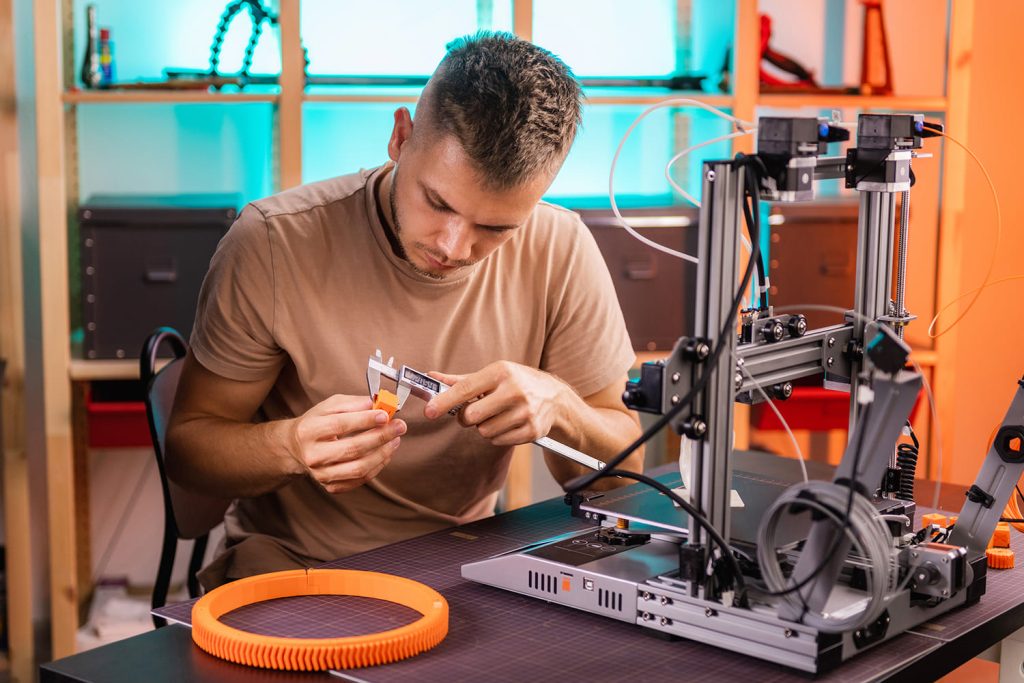
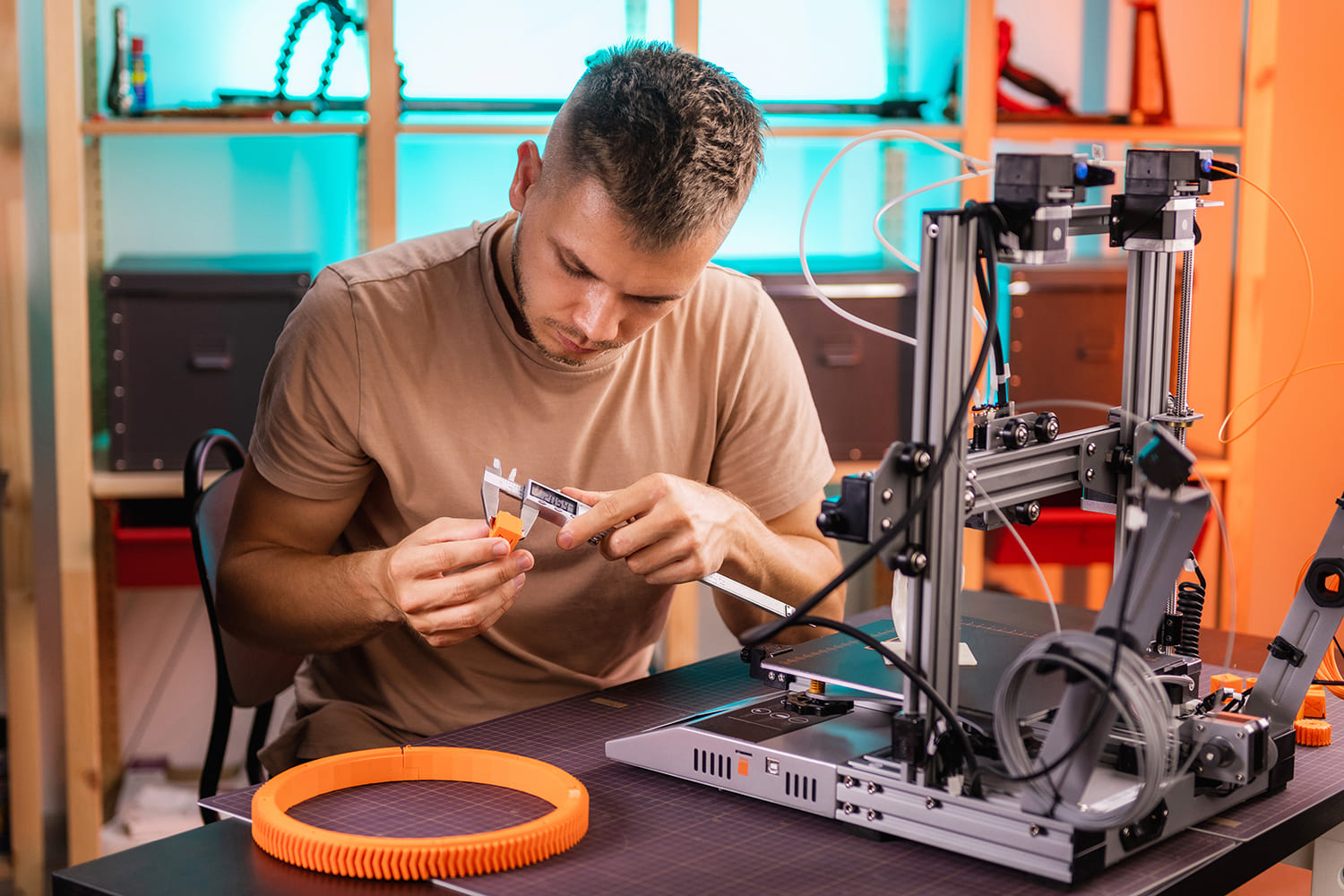
Storeperson engineer uses a 3D printer for rapid prototyping, tooling, and repair to slash lead times and costs.The integration of industrial 3D printing (Additive Manufacturing) is driving one of the most radical transformations in the history of inventory management. It is shifting the entire industry from a model of physical hoarding to one of digital on-demand creation. For a modern stores technician or Materials Controller, 3D printing isn’t replacing their job—it is completely rewriting what they consider to be “stock.”The future of the MRO (Maintenance, Repair, and Operations) stores under this technology breaks down into several key areas:
1. The Rise of the “Digital Inventory”
The most profound shift is financial and spatial. Traditionally, companies hold millions of dollars in working capital tied up in slow-moving physical parts that sit on shelves for years, accumulating dust and costing 20% to 35% annually in warehousing fees, insurance, and depreciation.
With advanced 3D printing, physical shelves are being liquidated and replaced by a Digital Twin Catalog—a cloud-based library of verified CAD files.
The New Workflow: Instead of the Materials Controller searching for a physical bracket on Shelf 4B, they locate the digital file in SAP, check the material specs, and hit “Print.” The part is manufactured right in the stores environment within hours.
2. Eradicating the “Obsolete Part” Nightmare
Every veteran storeperson knows the pain of managing legacy machinery. A critical machine breaks down, but the Original Equipment Manufacturer (OEM) went out of business a decade ago, or they no longer manufacture the replacement casting. The lead time to custom-forge a single piece could be months.
3D printing—coupled with handheld 3D scanners—allows the modern technician to reverse-engineer broken or obsolete components on the spot. A worn-out plastic gear or a bespoke metal valve can be scanned, digitally cleaned up to perfect tolerances, and printed in a matter of days (or hours), saving the factory from catastrophic, extended downtime.
3. Shifting from Plastic Prototypes to Industrial Metals
For a long time, 3D printing in a factory setting was relegated to basic plastic prototyping or cheap jigs. Today, industrial 3D printers handle high-performance polymers (like PEEK and ULTEM) and structural metals (like Titanium, Stainless Steel, and Inconel).
In highly regulated sectors like Aerospace or Pharmaceutical manufacturing, parts are being printed with full metallurgical integrity, matching or exceeding the strength of traditionally machined component
How This Redefines the Stores Technician’s Role
If parts are printed on demand, what happens to the person running the stores? Their role elevates from a material handler to a Digital Custodian and Quality Auditor, they are in charge of the Digital Warehouse.
From Forklifts to Filament & Powder Management
The physical inventory doesn’t disappear; it changes form. Instead of storing 10,000 different uniquely shaped metal brackets, the technician manages bulk raw materials: canisters of polymer filaments, liquid resins, and cartridges of industrial metal powder.
Data Integrity & IP Licensing
When a factory prints a proprietary OEM part, they don’t just copy it illegally. The future involves Digital Rights Management (DRM). The Supply Chain Technician will use SAP to buy a “one-time print licence” from the machine manufacturer. The technician’s job is to ensure the digital transaction is seamless, the print file is authorized, and the printer’s parameters exactly match the required engineering specifications.
Post-Processing and Quality Validation
A printed part often isn’t ready to go straight into a machine; it may require post-processing (heat treatment, support removal, or surface smoothing). The modern technician oversees this localized manufacturing process, ensuring that the finished part meets strict operational and regulatory compliance before it is handed to the maintenance engineer. To summarise, “Yesterday’s storeman was judged by how fast they could find a needle in a haystack of physical inventory. The modern Supply Chain Technician is judged by their ability to generate the needle out of thin air, using data files and advanced additive manufacturing to keep the factory running with zero physical footprint.
What Can Modern Printers Actually Produce?
Industrial 3D printers aren’t just making brittle plastic prototypes anymore; they produce end-use, safety-critical mechanical parts.
| Material Category | What They Can Produce | Real-World Factory Example |
| High-Performance Polymers (Nylon, Carbon Fiber, PEEK, ULTEM) | Structural brackets, custom gears, pneumatic manifolds, robotic grippers, protective housings. | A factory floor robot needs a custom gripper to hold a strangely shaped bottle. Instead of machining it, it’s printed in carbon-fiber nylon in 3 hours. |
| Industrial Metals (Titanium, Inconel, Tool Steel, Stainless) | Turbine blades, custom valves, obsolete engine components, hydraulic blocks, specialised molds. | A 30-year-old pump in a chemical plant fails. The original vendor is long gone. The part is scanned and printed in stainless steel, matching the mechanical strength of the original cast iron. |
| Advanced Ceramics | Insulators, high-temperature nozzles, chemical-resistant valves. | Printing specialised electrical insulator blocks used inside high-heat furnace environments. |
The Missing Link: CAD and the 3D Printer
This is the most crucial concept in the 3D printing to spare parts project. You cannot have 3D printing without CAD (Computer-Aided Design). They are two sides of the same digital coin, connected via a process that completely redefines the traditional warehouse.
CAD Software] ──(Digital File / STL)──> [Slicing Software] ──(G-Code)──> [3D Printer]
From 3D Blueprint to Physical Reality
A 3D printer is inherently “dumb”—it is just a robotic hot glue gun or a laser guided by coordinates. It requires a flawless digital 3D model to do anything.
The CAD File: An engineer designs the spare part in a CAD program (like SolidWorks, Autodesk Fusion, or Siemens NX). This file holds the exact mathematical layout, dimensions, and tolerances of the part.
The “Slicer” Software: The CAD file is exported (usually as an .STL or .STEP file) and imported into a “Slicer.” The slicer chops the 3D object into thousands of flat, horizontal 2D layers and calculates exactly how the printer’s nozzle or laser must move to draw that layer.
The G-Code: The slicer outputs a text file called G-Code (the universal language of automation). The storeperson plugs this file into the printer, presses start, and the machine executes the code.
The Power of the “Virtual Inventory”
Because of this tight link with CAD, factories no longer need physical shelves for low-volume spares.
The Digital Warehouse: Instead of hoarding 500 different types of physical metal brackets on warehouse shelves, a factory keeps a digital library of 500 CAD files. When a bracket breaks, the storeperson opens the CAD library, sends the file to the slicer, and prints one replacement part.
Furthermore, if a part consistently breaks due to a design flaw, an engineer can modify the CAD file in ten minutes (e.g., making a weak joint 2mm thicker). The next time the storeperson prints it, the part is automatically upgraded. You can’t do that with traditional inventory! Bridging the gap between the physical machines and the digital software is the key to learning how a modern factory floor actually operates.
The Big Players in the UK & Europe
Europe is actually a massive global powerhouse for industrial 3D printing (often called Additive Manufacturing). The landscape is generally split by material type:
The Metal Masters (Heavy Machinery & Precision Engineering)
EOS GmbH (Germany): Arguably the biggest titan in European industrial printing. They specialise in “Powder Bed Fusion,” where a powerful laser melts metallic powder layer by layer. Their machines are used by aerospace and automotive giants to print titanium, aluminum, and stainless steel components.
Renishaw (UK): A proud British engineering heavyweight based in Gloucestershire. Renishaw builds high-precision metal 3D printers that are heavily utilized in the UK’s aerospace, defense, and motorsport (Formula 1) sectors.
Nikon SLM Solutions (Germany): Another massive player in the metal space, known for machines that can print massive, complex metal structures very quickly.
The Polymer & Plastics Giants (Housings, Seals, and Brackets)
HP (Global/Europe): HP’s Multi Jet Fusion (MJF) technology has completely revolutionized plastic part production. Instead of printing a single line of plastic, they use an inkjet-like head to apply fusing agents across a bed of powder, curing whole layers at once. They have massive partnerships across Europe (like the Würth Additive Group) to manage digital spare parts inventories.
Stratasys (Global Leader): The pioneer of FDM (Fused Deposition Modeling—the classic “plastic noodle” printing). They manufacture high-end industrial machines that print flight-certified thermoplastics, heavy-duty nylon, and chemical-resistant polymers.
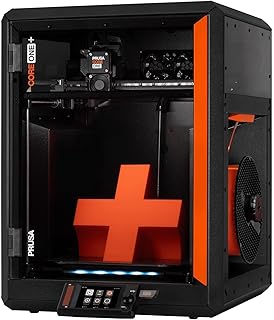
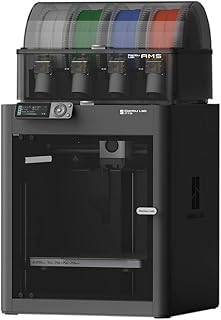
Prusa Research (Czech Republic) & UltiMaker (Netherlands): While they started in the consumer/desktop space, both have aggressively moved into the industrial workflow. Prusa’s newest fully enclosed pro systems (like the Core One) and UltiMaker’s network are widely used in European factories for quick, in-house tooling and custom brackets.
How Big is the Market for In-House 3D Printed Spares?