

Commercial Scale: Industrial Chaga Pulverisers & Mills
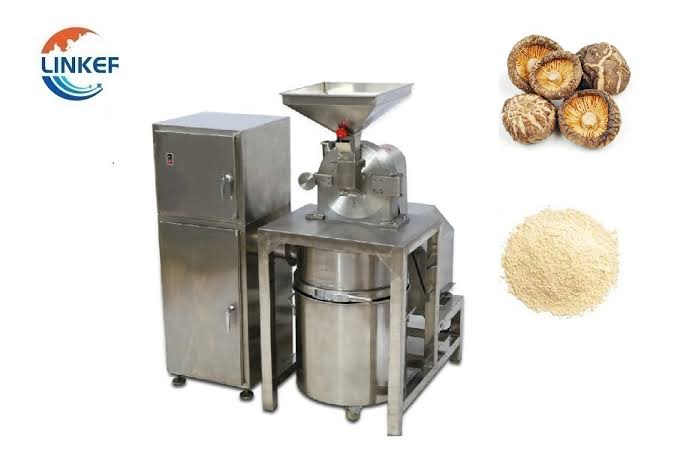
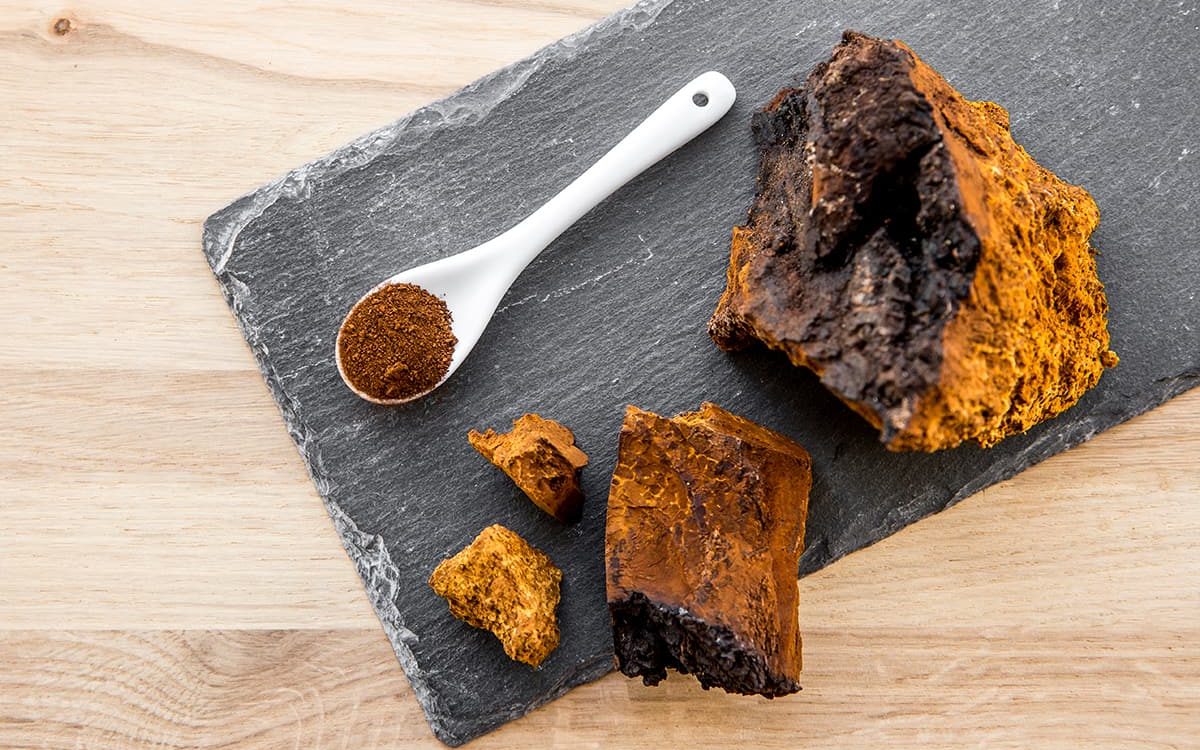
If your looking to make serious amounts of Chaga powder, maybe you like foraging the Birch Forests or you have a commercial interest in the product, you are going to have to upgrade to some more industrial type equipment. As shown in the image below the machines very in size and depend on the amount of powder you wish to produce and also how much you wish to invest.

Hammer Mill (Left Hand)
Industrial processing plants use high-speed rotating hammers to shatter the rock-hard Chaga chunks against a heavy-duty steel screen. A hammer mill doesn’t slice or cut material; instead, it relies on extreme kinetic impact to shatter the Chaga. The process happens in three rapid stages:
1. The Gravity Feed: Raw, bone-dry Chaga chunks are dropped into the top hopper. They feed by gravity directly into the mill’s grinding chamber (the housing).
2. The High-Speed Impact Zone: Inside the chamber sits a central spinning rotor equipped with rows of heavy-duty steel “hammers” (free-swinging metal bars or flails). As the rotor spins at incredibly high speeds (often between 1,800 to over 3,600 RPM), these steel hammers repeatedly smash into the brittle Chaga chunks with immense force, instantly fracturing the dense, wood-like structure.
3. Screen Classification: The bottom of the grinding chamber is lined with a heavy, perforated steel screen. The pulverised Chaga particles bounce around the chamber until they are fractured down small enough to pass through the screen holes. If a piece is too big, it gets swept back up by the hammers for another round of impact until it complies.
Once through the screen, the uniform Chaga powder is collected—usually via a pneumatic dust collection system to keep the fine, airborne dust from coating the workshop!
Universal Pin Grinders ( Centre pic )
A pin grinder uses intense shear force and high-speed collision,rather than shattering and force of the hammer mill, making it the absolute king for turning granular Chaga chunks into ultra-fine, velvety powder. Unlike a hammer mill that relies on free-swinging bars, a universal pin grinder forces the material through a labyrinth of interlocking, high-speed steel pins to achieve a much finer particle size.
1. The Centrifugal Feed: Granular or pre-crushed Chaga chunks enter the center of the grinding chamber via the hopper. Centrifugal force instantly flings the material outward from the center toward the perimeter of the spinning discs.
2. The Intermeshing Pin Maze: The grinding chamber contains two vertical discs lined with rows of heavy-duty, hardened steel pins. Usually, one disc is stationary (the stator) and the other spins at extreme speeds (the rotor), often exceeding 5,000 RPM. The pins intermesh with each other but do not touch. As the Chaga passes through, it is subjected to an unmitigated barrage of high-velocity impacts against the pins, as well as particle-on-particle collisions.
3. Continuous High-Shear Pulverization: The gap between the pins gets progressively tighter towards the outer edge of the discs. This forces the Chaga to undergo extreme mechanical shearing. By the time the material escapes the outermost row of pins, it has been completely pulverized into an ultra-fine powder, bypassing the need for a traditional bottom screen and preventing the oily, dense compounds of Chaga from blinding (clogging) the machine.
The Heavy-Duty Blender Route (Right Hand )
For the small-scale forager or maker who wants to process Chaga safely in a workshop or shed setting,
Phase 1: The Breakdown (Sizing Down): Using a clean hatchet/axe or a heavy-duty workshop vise and a wood chisel to break large wild conks into manageable, golf-ball-sized chunks.
Phase 2: The Pulverization: The Heavy-Duty Blender Route: High-horsepower commercial blenders (like a Vitamix or Blendtec) can handle small, pre-broken chunks—but I must stress the need for pulsing.
There is a further option that probably needs more Manual Effort –The Grain Mill Alternative: Hand-cranked or motorized cast-iron grain mills (used for homebrewing or corn milling) as a rugged, low-speed, high-torque alternative that won’t burn out.






 From the Forest to the Cup: What’s Next?
Now that you know how to conquer the mechanical challenge of processing this rock-hard fungus without destroying your workshop tools, what do you actually do with the powder?
Processing Chaga is only half the battle. To truly unlock its power, you need to understand how to brew it, dose it, and appreciate the incredible history behind this ancient northern tradition. Living and working right here in Estonia—home to some of the cleanest, most pristine forests and highest-quality Chaga in the world—I’ve put together the ultimate companion guide.
Introducing: The Ultimate Guide to Chaga: History, Benefits, and Traditions – COMING SOON
Whether you’re a hobbyist forager, a workshop maker, or just curious about natural wellness, this comprehensive digital e-book bridges the gap between raw forest material and daily ritual.
Inside this complete guide, you’ll discover:
The Deep History: Dive into Northern European and Siberian folklore to see how ancient cultures used Chaga for survival and vitality.
Science-Backed Benefits: A clear, fluff-free breakdown of how Chaga supports immunity, fights oxidative stress, and acts as a natural powerhouse.
The Estonian Advantage: Why Chaga sourced from the pure, frozen forests of Estonia holds a legendary status.
Preparation & Recipes: Step-by-step instructions on traditional dual-extraction methods, simple teas, and modern elixirs so you don’t waste a single gram of your hard-earned powder.
Don’t let your freshly ground Chaga sit on a shelf. Learn how to use it the right way today.