
CLEAN AIR - HOW IMPORTANT IS IT TO AUTOMATION ?

If we learnt anything from the spread of the Covid-19 epidemic it was how important clean air and oxygen is to us as individuals on this planet. We all had to don face masks and observe a 2metre rule so as not to spread the infectious disease. Now whether that was the correct way to go will no doubt be argued over long into the future.
For my part I was just a maintenance engineer keeping the wheels of industry turning, albeit in the Food industry so it was of importance. At first although regulations were put in place as Government decreed it was taken rather light-heartedly, nobody had experienced anything Covid yet ( a few wideheads took the opportunity to get a 3 day holiday on the basis “someone in the family had symptoms” ) but generally OK.
In a flash though that changed, an individual retuned from a flight, no real symptoms, by the end of the shift all the maintenance team had Covid, all had tests and were sent home for the mandatory recuperation period. other shifts were asked to cover from their days off, but soon they lost members as the epidemic grew. On our site there were 2 fairly large factories, sometimes only one fit person was left running the site, Office workers went on remote and production suffered. Unfortunately fatalities occurred and it was now taken very seriously.
So why is this relevant you may ask, in our automated factory?. Well no factory will be 100% free of people, it shows how vulnerable you could be to a similar outbreak. Covid -19 is an airborne virus that spreads primarily through the air we breathe. Clean air is vital for human health, cognitive performance, and ecosystem stability. Inhaling polluted air drastically increases the risk of premature death, heart disease, stroke, and respiratory illnesses like asthma. Globally, poor air quality causes roughly 7 million premature deaths every year.
Beyond immediate physical health, clean air is incredibly important for everyday well-being and environmental balance, therefore outdoor and indoor air quality (IAQ) directly impacts workplace productivity. You can’t have a highly automated, efficient factory if the human operators and engineers are sluggish due to poor air quality.
From Individual Health to the Factory Health
As we can see from the summary above, looking after your workforce is extremely important and Clean Air is just one example of the things we must improve upon. Outside of our factory and offices is more or less out of control although we can influence the substances that we emit from our sites This is a lot more regulated sphere nowadays and we shall touch further on. I wish to concentrate for the time being on how certain industries have led by example.
Pharmaceuticals & Cleanrooms (Zero-Tolerance Automation)
The extreme end of automation where air purity is non-negotiable. WHY ? well — The Human Problem: We Are “Dirty” in fact humans are the single largest source of contamination in a manufacturing facility. We constantly shed skin cells (about 30,000 to 40,000 per minute), hair, and microscopic respiratory droplets. By introducing automated robotics, we remove the primary biological threat vector from the equation.
The Dynamics of Pharmaceutical Robotics
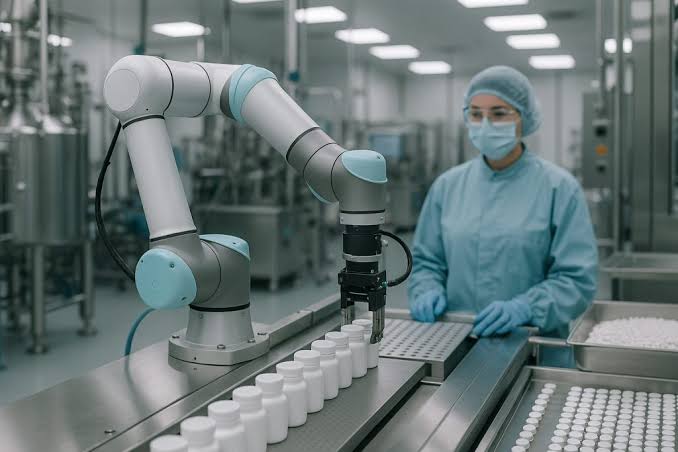
In compounding (mixing and creating drugs) and packaging (vials, syringes, blisters), robots are engineered differently than standard factory arms:
Zero-Particle Materials: These robots are built using specialized materials like anodized aluminum or titanium, sealed joints, and cleanroom-grade lubricants. They do not “shed” microscopic grease or paint chips during fast, repetitive motions.
- Sterilization Resistance: They feature smooth, crevice-free surfaces that can withstand aggressive chemical washes, like 70% Isopropyl Alcohol (IPA) or Vaporized Hydrogen Peroxide (VHP) fogging, without corroding.
- Compounding Precision: In intravenous (IV) or oncology drug compounding, specialized robotic arms use high-precision scales and machine vision to dose toxic or hyper-sensitive active ingredients down to the exact milligram, ensuring 100% uniformity while keeping human workers safe from hazardous materials.
Deciphering ISO Cleanroom Standards
The pharmaceutical industry is very strict on air conditions and is monitored at all times and adheres to ISO 14644-1 which measures air cleanliness, and how it aligns with pharmaceutical operations.
| ISO Class | Max Particles Allowed per m3 (≥0.5μm) | Pharma Equivalent (EU GMP) | Typical Application |
| ISO 5 | 3,520 | Grade A | Critical Zone: Aseptic filling of vials, open ampoules, and direct drug compounding. |
| ISO 6 / 7 | 35,200 to 352,000 | Grade B / C | Background Zone: The surrounding cleanroom environment where capped or sealed products are transported. |
| ISO 8 | 3,520,000 | Grade D | Support Zone: Preliminary packaging, component washing, and raw material handling. |
To put into context, normal outdoor city air contains roughly 35,000,000 particles of this size per cubic metre. An ISO 5 cleanroom is 10,000 times cleaner than the air we breathe on a city street.
How Automated Filtration Systems Do the Heavy Lifting
The robot is only half the battle; the air itself must be actively scrubbed. Automated HVAC and Fan Filter Units (FFUs) manage this using two primary mechanisms:
HEPA and ULPA Filtration: Air is continuously forced through High-Efficiency Particulate Air (HEPA) filters, which trap 99.97% of particles as small as $0.3\mu m$, effectively filtering out both inert dust and biological hitchhikers like bacteria and fungal spores.
Laminar (Unidirectional) Airflow: The automated system doesn’t just blow air into the room randomly; it pushes it in a strict, uniform downward stream (laminar flow) at a controlled speed. This creates an invisible air curtain over the robotic workspace. Any particle generated by the machinery is immediately swept downward toward floor vents before it can float sideways and contaminate an open vial.
- Positive Pressure Control: The automation system maintains higher air pressure inside the ISO 5 zone than the rooms outside it. If a door or pass-through hatch opens, air rushes out, acting as a physical shield that prevents dirty ambient air from leaking in.
The Cleanroom Ecosystem: Main Suppliers
When looking at Automated Filtration and Air Handling Units (AHUs) for pharma, the industry relies on a few core engineering giants to handle different aspects of the environment:
1. Air Handling & Environmental Control (The Hardware)
Munters: As you experienced firsthand, Munters is the go-to for industrial-grade environmental control, particularly where precise moisture management is non-negotiable. In pharmaceutical compounding, excess humidity ruins product stability and causes powders to clump—clogging automated dosing machines. Munters’ desiccant technology effectively keeps the air bone-dry.
- FläktGroup: Famous for their premium modular AHUs (like the CAIRplus range). They specialize in hyper-hygienic, easily cleanable internal surfaces that comply with strict VDI 6022 hygiene standards, preventing any internal bacterial growth within the ductwork.
- Daikin Applied / Carrier / Trane: The macroeconomic giants of the market. They supply massive, highly automated custom-built AHUs capable of moving tens of thousands of cubic feet of air per minute (CFM) while integrating seamlessly into a building’s smart automation system (BMS).
2. The Filter Specialists (The Defences)
Camfil: Widely considered the gold standard for the actual HEPA and ULPA filtration elements that slot into these AHUs and Fan Filter Units (FFUs). They create the micro-fiber matrices that physically trap viruses, bacteria, and dust.
- Systemair: Another major European player known for high-efficiency Fan Filter Units that sit directly in cleanroom ceilings to distribute laminar flow evenly across automated machinery.
SAFETY AND OPERATIONAL NOTE
The actual HEPA Filters are under strict control especially in the Pharmaceutical Industry, they must be replaced at the stated intervals which probably depends on the type of product that is been filtered. I know from my previous experience at GSK that the HEPA filters that came in to contact with Penicilin had to be put in 3 bags when removing and before placing in the waste container.The logging and keeping of filter information is a strict requirement in most industries.
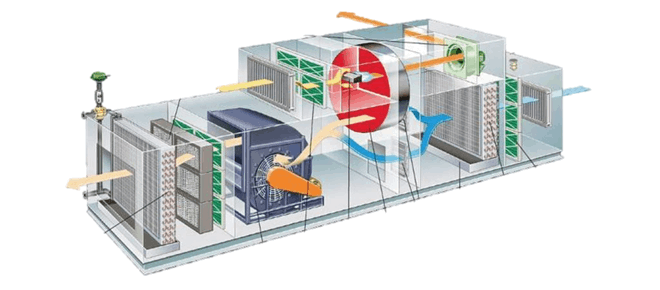
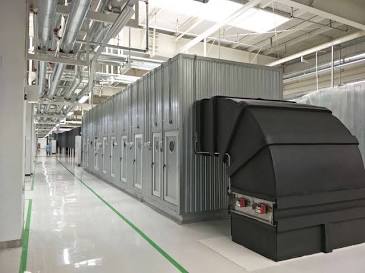
In facilities operated by global giants like GSK, achieving cleanroom compliance isn’t just about putting a filter over a vent. It requires massive, specialized infrastructure. Industrial heavyweights like Munters supply the core Air Handling Units (AHUs) required to manage precise humidity levels and prevent moisture from ruining automated compounding lines. Meanwhile, filter pioneers like Camfil provide the hyper-dense HEPA frameworks that physically strip out microscopic threats. These systems act as the invisible lungs of the automated facility, some times the AHU’s are next to the machine or room that they control or they can be in vast banks of units in roof spaces. Sensors and monitors control the working area.
Pneumatic Air (The Muscle of Industrial Automation)
While ambient air inside the cleanroom must be scrubbed of microbes to protect the product, the internal ‘breath’ powering the automated machinery—the compressed pneumatic air—faces its own set of strict engineering rules.
Pneumatics are the literal muscles of automation (valves, cylinders, actuators).
The Danger of “Dirty” Air: Moisture, oil, and particulates in compressed air cause corrosion, seal degradation, and sudden machine downtime.
The Automation Angle: Investing in high-quality air filtration and drying systems isn’t an afterthought—it’s preventative maintenance that guarantees high OEE (Overall Equipment Effectiveness).
- And a important topic to remember – If a manufacturing plant doesn’t treat the air supplying a robotic arm, they will void the manufacturer’s warranty faster than almost anything else. Robot manufacturers—such as Fanuc, ABB, KUKA, and Yaskawa—rarely leave compressed air quality to chance. While they might not always mandate a specific brand of filter, they strictly mandate a specific standard of air purity that must be met using a combination of filters and dryers. Global robot manufacturers like Fanuc, ABB, and KUKA heavily insist on strict air-treatment protocols before a single cubic metre of air enters their equipment. They typically mandate compliance with ISO 8573-1 (the international standard for compressed air quality), requiring multi-stage filtration to eliminate solid particles, bulk water, and aerosol oils. Failing to meet these strict filtration parameters leads to clogged internal pneumatic valves, degraded rubber seals, and catastrophic friction—meaning dirty air doesn’t just cause downtime, it outright voids the manufacturer’s warranty.
TIPS OF THE TRADE: automation setups use a Filter-Regulator-Lubricator (FRL) unit right at the drop point of the robot. This ensures the air is stripped of water and dirt, brought to the exact pressure the robot expects, and sometimes lightly misted with clean oil (if the valves aren’t pre-lubricated) to keep the automation moving flawlessly.
To maintain the pristine air quality demanded by high-tech automation without sending energy bills into orbit, forward-thinking industries rely on advanced Air Handling Units (AHUs) equipped with energy-recovery loops. By capturing the thermal energy of exhausted internal air and using it to pre-condition incoming fresh air, these systems achieve a brilliant paradox: maximum ventilation with minimal environmental footprint.
It is exactly this intersection of smart automation and eco-conscious engineering that has made Estonia a rising powerhouse in the “green tech” space. Known globally for its digital innovation, Estonia applies that same sleek, optimized approach to its environment. Because in a country where green technology is woven into the economy, clean air isn’t just a byproduct of low population density—it’s a resource protected by design. The same efficiency dictating high-tech AHUs aligns perfectly with Estonia’s national ethos: leave the smallest footprint possible so that nature can do what it does best.. Estonia actually has some fantastic homegrown green tech and ventilation companies that perfectly fit the transition from heavy industrial AHUs down to sustainable home technology, here are 3 of the best,
1. Skawen
Based right in Tallinn, Skawen designs massive industrial Air Handling Units specifically utilizing Run-Around Coil loops and custom composite systems to handle highly demanding environments (like corrosive air in flour mills or humid pool clubs). They are the perfect representation of the “automated factory” tech you are transitioning away from.
2. Airobot (Airobot Technologies)
This is a proud Estonian tech company born out of collaboration with researchers at TalTech and the University of Tartu. Their whole philosophy is: “If Estonia has the cleanest outdoor air in the world, why shouldn’t our indoor spaces have it too?” They build smart, autonomous energy-recovery ventilation devices that trackCO2 humidity, and VOCs in real time.
3. Sol Navitas
They offer Solar-powered, zero-emission climate solutions, and are an Estonian eco-tech firm that crafts smart AHUs powered by integrated solar air heating panels. They look at buildings as a whole ecosystem, matching the exact “green tech leaving zero footprint” vibe you want to highlight.
By the way, referring back to TalTech (Tallinn University of Technology) they are practically the epicenter of green building and ventilation science in Northern Europe. Their Nearly Zero Energy Buildings (nZEB) Research Group, led by global experts like Professor Jarek Kurnitski, literally helps write the European standards for indoor air quality and energy efficiency. In fact TalTech actively treats its own campus as a living testbed for this exact tech. Right now, they are piloting “smart campus” renovations that integrate AI-driven demand-controlled ventilation—systems that use real-time CO2 and occupancy sensors to shift airflow only where it’s needed, cutting fan electricity by over 60% and total heating energy by up to 35%. In fact, local pioneers like Airobot actively partner with TalTech to test and validate their smart energy-recovery systems using real Estonian climate data.
They operate on a shared national ethos: use hyper-efficient, digital engineering to leave the smallest footprint possible, so that nature can do what it does best. Yet, as impressive as TalTech’s digital, demand-controlled engineering is, the ultimate goal of all this innovation isn’t to outsmart nature—it’s to preserve it. The true benchmark of what these systems are trying to achieve lies just beyond the city limits. According to global air quality surveys by organizations like IQAir and the WHO, Estonia consistently ranks at the absolute top of the world for atmospheric purity, standing as one of the only nations on the planet where the air is officially classified as completely clean.
To truly understand what that means, you have to leave the algorithms behind and venture deep into the old-growth Estonian woodlands. Out here, the air isn’t just a metric on a spreadsheet; it’s a living, breathing ecosystem. And if you know where to look, nature provides its own diagnostic tools. Nestled among the silver birches where I keep my little Chaga Shack, you’ll find wild Chaga mushrooms growing on the bark. In the world of forest ecology, Chaga acts like a natural canary in a coal mine. This slow-growing, nutrient-dense fungus is incredibly sensitive to its environment; it simply cannot thrive, accumulate its rich antioxidants, or survive in the presence of heavy industrial pollutants or compromised air. Seeing it flourish out here is the ultimate, silent proof that the environment is pristine. It serves as a beautiful, daily reminder of why we build smart ventilation tools in the first place: not to simulate a clean environment inside a concrete box, but to protect the raw, unadulterated breathing room that already exists right on our doorstep.


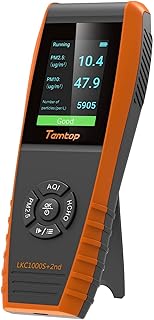
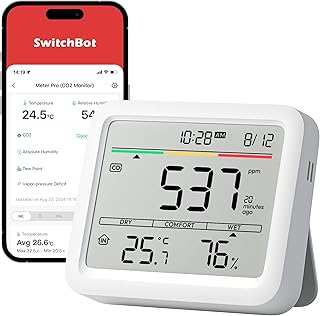
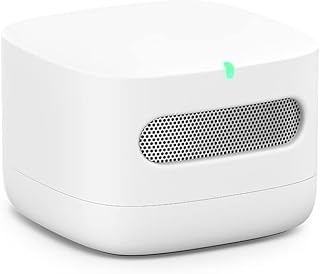
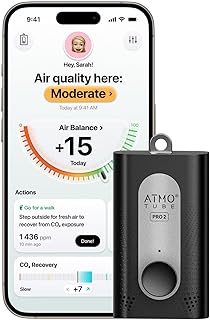
AIR QUALITY MONITORS
You can check your own Air Quality either in your own home or there are monitors that allow you to check Air Quality outdoors also. I have put a selection of chosen ones in the box below, just click on an Image to be re-directed for more information and a price check.
AS AN AMAZON ASSOCIATES MEMBER I MAY EARN FROM ANY FROM QUALIFYING PURCHASES AT NO EXTRA COST TO YOURSELVES.