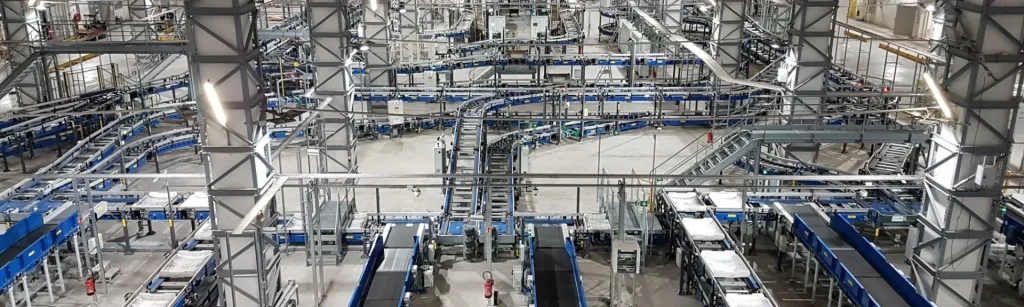
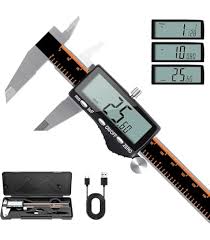
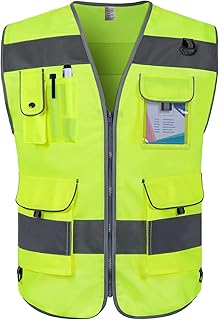
So what makes the Project Engineer worthy of our further investigation ? Here is a breakdown of the “superpowers” they usually bring to a project and we can analyse these more closely.
Project Engineer’s Crucial Role in Automation
The Multi-Lingual Translator: They speak “Client,” “Fabricator,” and “Programmer.” They ensure the client’s vague request for “faster throughput” becomes a technical spec the build team can actually execute.
The “Real-World” Filter: They are the ones who spot that a robot’s swing radius will hit a support pillar that wasn’t updated in the latest architectural drawing.
Risk Mitigation Specialist: In automation, things go wrong—parts are delayed, or sensors don’t calibrate. The Project Engineer is the one who recalculates the critical path to keep the installation on schedule.
The Compliance Guardian: They ensure the installation meets OSHA, ISO, or RIA safety standards, which is arguably the most critical part of any robotics deployment.
The Life Cycle of the Installation
| Phase | The Project Engineer’s Impact |
| Pre-Installation | Validating the BOM (Bill of Materials) and site readiness. |
| Execution | Managing the electrical and mechanical crews to ensure timing is synchronized. |
| Commissioning | Overseeing the “Handshake” between the new automation and existing plant systems. |
| Post-Mortem | Handing over documentation and training the end-user. |
“If the Robot or Automation is the heart of the system and the Code is the brain, the Project Engineer is the nervous system—without them, the body simply doesn’t move.”
The Project Engineer is essentially the “General Practitioner” of the robotics world—they need to know enough about everything to ensure the specialists don’t accidentally work against one another. As we discussed in an earlier post, the P/E is a “Critical, Leading player ” at the Pre-Installation meetings.
The “Full Range” Skill Matrix
To do the role justice, you can categorize their skills into three distinct pillars. This structure helps the reader see why the PE is the “load-bearing” member of the installation team, integrating the “office” side of the role is also mandatory to the role. While the Project Engineer is often seen in high-vis gear on the factory floor, their “digital twin” work in the office is what prevents expensive disasters during the physical installation.
1. The Technical Foundation (Hard Skills)
Even if they aren’t the ones writing every line of code, they must have the technical literacy to audit the work.
System Integration: Understanding how PLC (Programmable Logic Controller) logic interacts with robotic arm controllers.
Layout & Spatial Awareness: Proficiency in CAD (AutoCAD/SolidWorks) to verify that the physical footprint of the robot, safety fencing, and light curtains actually fits the factory floor.
Regulatory Knowledge: Deep understanding of safety standards like ISO 10218 (Robots and robotic devices).
2. The Operational Engine (Methodology)
This is where the “Project” part of their title shines.
Critical Path Analysis: Identifying which small delay (e.g., a late bracket delivery) will cascade into a total project stall.
Budgetary Oversight: Managing the “scope creep” that happens when a client starts asking for “one more little feature” mid-installation.
Vendor Management: Coordinating between the robot OEM (like FANUC or ABB) and the local electrical contractors.
3. The “Glue” (Soft Skills)
In the high-pressure environment of a live installation, these are often the most valuable traits.
Conflict Resolution: Mediating between the “old school” floor operators who might be sceptical of automation and the “new school” programmers.
Adaptive Problem Solving: The ability to make a “field fix” when the site conditions don’t match the blueprints.
Technical Writing: Translating complex technical manuals into simplified SOPs (Standard Operating Procedures) for the client
4. The Project Engineer’s Digital Toolbox
Here is a breakdown of the essential programs they use to plan, simulate, and execute an installation.
1. Design & Visualization (The “Blueprints”)
Before a single bolt is turned, the PE lives in CAD (Computer-Aided Design) software.
AutoCAD: Used for 2D floor plans. They use this to ensure the robot cell fits within the factory aisles and respects “egress” (emergency exit) paths.
SolidWorks / Autodesk Inventor: Used for 3D modelling. They’ll use this to check for mechanical interferences—basically making sure the robot arm doesn’t smack into a safety fence when it reaches full extension.
2. Simulation (The “Digital Twin”)
One of the coolest parts of the job is “virtually” running the robot before it’s even shipped.
RobotStudio (ABB), RoboGuide (FANUC), or KUKA.Sim: These are brand-specific simulators. The PE uses them to calculate cycle times (how many parts per minute) and to ensure the robot can reach all necessary points without hitting a “singularity” (a mechanical jam).
Visual Components / FlexSim: General factory simulation software. This helps the PE show the client how the new robot will affect the entire production line flow.
3. Project Management (The “Timeline”)
The PE is the guardian of the deadline.
MS Project / Primavera P6: These are the heavy hitters for “Gantt Charts.” If the electrician is two days late, the PE uses this to see how that shifts the final “Go-Live” date.
Bluebeam Revu: A specialized PDF tool. It’s used for “redlining” drawings—marking up changes in the field and instantly sharing them with the design team back at HQ.
4. Communication & Logic (The “Handshake”)
PLC Editing Tools (Studio 5000 / TIA Portal): While they might not write the core code, they often use these to “force” signals or troubleshoot why a conveyor isn’t talking to the robot.
ERP Systems (SAP / Oracle): Used to track the Bill of Materials (BOM). If a specific safety sensor is missing from the crate, the PE tracks its procurement here.
CONCLUSION
The Project Engineer may be labelled as the “Curator of the Truth.” Everyone else has a piece of the puzzle (the programmer has the code, the client has the goal, the vendor has the hardware), but the PE is the only one looking at the master model where all those pieces must fit together perfectly. Whilst every company has its own culture and usually no 2 jobs are the same the P/E career does give versatility. A successful Project Engineer in this field needs to be comfortable transitioning between the two environments. The office time is where the technical foundation (PLC code, electrical schematics, project timelines) is built, while the on-site time is where that foundation is validated against the physical reality of the factory floor.
Typical Work Distribution
In most automation projects, the balance changes drastically as the project moves from conception to final hand-over.
| Project Phase | Focus | Typical Split (Office/Site) |
| Initiation & Planning | Budgeting, scope definition, vendor selection | 95% / 5% |
| Design & Engineering | CAD, logic programming, simulation | 80% / 20% |
| Installation | Site supervision, mechanical/electrical assembly | 20% / 80% |
| Commissioning & Testing | Debugging, optimization, final validation | 10% / 90% |
NOTE: During the ” Commissioning Phase ” During the final weeks of a project, the “on-site” requirement often spikes to nearly 100%, and I feel it is important to mention for any aspiring P/E that this is the period where a Project Engineer is most visible and directly responsible for the success of the system integration.
The Reality Check: Who is this for?
In all probability I would say this career is not for those who want a predictable 9-to-5 routine or a strictly controlled environment.
The Intensity: It requires resilience. When a system goes down, the pressure is immediate and high.
The Learning Curve: The technology changes rapidly. You have to be a lifelong learner to stay relevant.
The Environment: It is often loud, dusty, and physically demanding.
Ultimately, for a young person who wants to build the future rather than just observe it, this is one of the most fulfilling paths available. It teaches grit, adaptability, and systems thinking in a way that very few entry-level roles can match. It is an exceptionally rewarding career for a young person, particularly if they are driven by curiosity, problem-solving, and a desire to see the direct results of their labour. Unlike many corporate roles where “work” can feel abstract or purely digital, the field of Automation and Robotics is profoundly tangible. That varied day may start with an early morning coffee in the office through to Commissioning,” the PE’s has a transition from a morning site walk-through (checking bolts and wiring) to an afternoon boardroom meeting (explaining milestones to the CEO).
The “I Built That” Factor
There is a specific, profound satisfaction in automation that is hard to find elsewhere. You start with lines of code, electrical schematics, and mechanical designs, and you end with a machine that moves, processes products, or solves a physical problem. For a young engineer, standing on a factory floor and watching a robotic cell cycle perfectly for the first time is a professional milestone that builds immense pride and confidence.
And finally remember – Accountability. In most firms, when an installation succeeds, the TEAM celebrates; if it fails, the Project Engineer is the one answering the phone and emails, strong characters are needed.
As an Amazon Affiliate Member I may earn a commission on qualifying purchases at no extra costs to yourselves.
-