

Despite Brexit, there’s a significant, often overlooked opportunity for skilled UK contractors and freelancers in Europe’s robotics and automated sectors.
In the next five years, Europe’s factory floors and distribution centres won’t just be ‘automated’—they will be redefined. With the European logistics automation market projected to hit over €50 billion by 2034, the quiet revolution of robots is demanding a loud response: an immediate, critical shift toward specialized skills in coding, maintenance, and data analysis, or risk leaving the current workforce obsolete. The age of ‘human hands’ in European logistics and manufacturing is drawing to a close, yet the demand for specialized human expertise has never been higher. Step into any major European warehouse today, and you’re stepping into the future of work. The silence where thousands of human voices once were is being filled by the whirring of Automated Guided Vehicles (AGVs) and the efficient precision of robotic arms. This rapid, almost clinical takeover of routine tasks has created the single most urgent workforce challenge for the continent: a desperate, immediate need to transform ‘unskilled’ personnel into the specialized engineers and data scientists required to run Europe’s new, automated industrial complex
.
Well why is this required you may ask ?
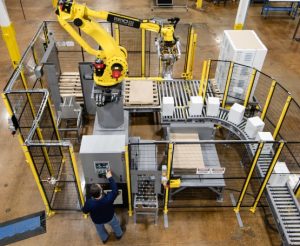
The motivation for automation in industry is a complex interplay of economic, operational, and strategic drivers that businesses pursue to enhance competitiveness and sustainability. It’s not just about replacing human labour but about fundamentally transforming production and business processes. In short while cost reduction and productivity increase are the most common initial motivators. The modern drive towards automation is increasingly fuelled by the need for quality, flexibility and strategic digital integration to build a more resilient and responsive business model. Big investment in automation in the Pharmaceutical Distribution, Smart Factory Logistics and manufacturing facilities are rapidly adopting Automated Guided Vehicles (AGVs) and Autonomous Mobile Robots (AMRs) to automate the delivery of parts to the assembly line, so minimizing delays in Just-in-Time (JIT) manufacturing. All this requires highly skilled Tradespeople and Designers for a successful project.
What skills are in demand ?
Well the full compliment of skilled and educated people are required to complete all the tasks in these industries, Companies are looking to hire – Robotics engineers, automation specialists, PLC programmers, data analysts for logistics optimization, maintenance technicians for automated systems, project managers for automation implementation). Always in demand are Technicians and Electricians with experience of the Pharmaceutical industry, this highly regulated and controlled industry tends to breed its own niche experts,
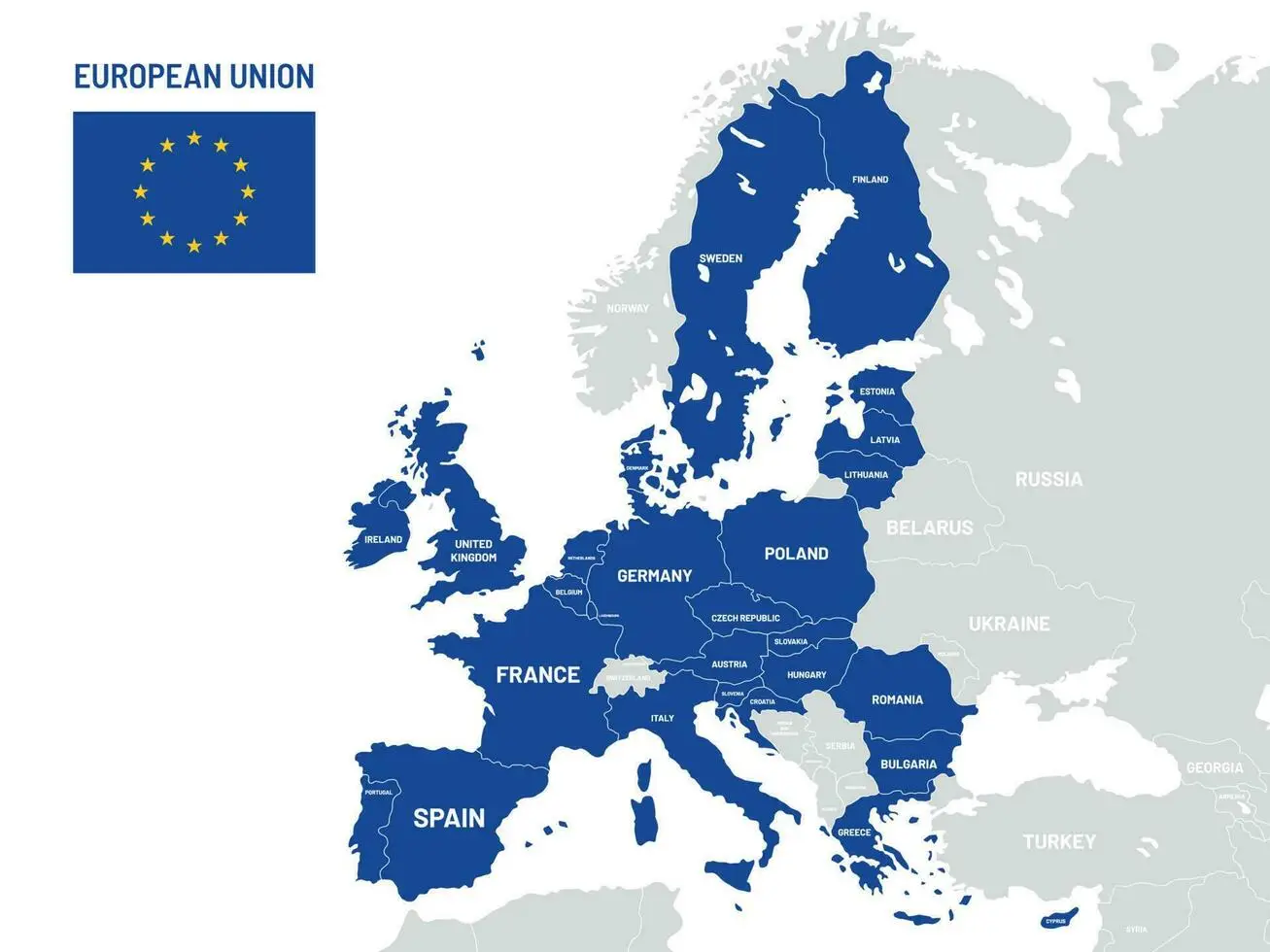
European Leading Locations
Germany leads in the depth of industrial automation, the Netherlands/Belgium lead in the scale of logistics automation driven by trade gateways, and the CEE countries are the engine for new warehouse automation growth across the continent.
I may earn a commission if you sign up through my links further down the post at no extra cost to you”, to keep me in new safety equipment.
The Brexit Reality: Challenges & Solutions for UK Freelancers
The change for UK contractors looking to work in EU countries is significant due to the end of the EU’s freedom of movement. Broadly speaking, the ease of movement and work that existed pre-Brexit has been replaced by more complex, country-specific requirements, in short – for a UK contractor, the process has changed from one of automatic right to one of permission and compliance with the national immigration and employment laws of the specific EU country.
Immigration & Work Rights
Pre-Brexit (Freedom of Movement) | Current Regulations (Post-Brexit) |
| Easy Access: UK nationals could live, work, and contract freely in any EU/EEA member state without visas or work permits. | Third-Country National Status: UK nationals are now generally classed as ‘third-country nationals’ in the EU. |
| No Work Permit Required: No job offer or sponsorship was needed to be self-employed or accept a contract. | Work Permits & Visas Required: In most cases, a UK contractor now requires a work visa or work permit to take up a contract in an EU country, similar to other non-EU citizens. This often requires: * A concrete job offer/contract in the host country. * Meeting country-specific skill/salary thresholds. * The process is national, varying significantly between each EU member state. |
| Simple Border Crossings: Could spend unlimited time in the EU for work. | Schengen Limits for Short Stays: UK citizens can visit the Schengen area (most of the EU) for up to 90 days in any 180-day period for tourism or limited business activities (like meetings or attending conferences). Crucially, this does not generally cover fulfilling a contract or providing services. |
| No Sponsorship Needed: A UK Limited Company could easily provide services across the EU. | Limited Company Hurdles: A UK Limited Company cannot typically sponsor its own director/employee for a work permit in an EU country. Contractors may need to explore local self-employed work permits (which can be hard to obtain) or work through a local umbrella/payroll company. |
Compliance and Administration
Pre-Brexit (Freedom of Movement) | Current Regulations (Post-Brexit) |
| Social Security: A UK-based contractor would typically remain in the UK’s social security system (National Insurance) via an A1 portable document, avoiding double contributions. | A1 Form & Social Security: The rules remain broadly similar under the Trade and Cooperation Agreement (TCA), but obtaining the A1 certificate from HMRC for a short-term posting to confirm continued UK National Insurance liability is now critical and more heavily enforced by host countries. Without it, the contractor may be liable for local social security contributions from day one. |
| Professional Qualifications: Mutual recognition of professional qualifications (e.g., engineering, architecture) was often automatic or streamlined. | Qualification Recognition: UK professional qualifications may no longer be automatically recognised in EU member states, requiring individual re-validation or accreditation in the country of work. |
| Data & Contract Law: UK law aligned closely with EU law (e.g., GDPR), simplifying cross-border contracts. | Legal Complexity: Contracts need to address differences in governing law, jurisdiction (English court judgments may not be automatically recognised), and compliance with both UK GDPR and EU GDPR if handling EU client data. |
As an example of a single country GERMANY, for UK contractors (now considered third-country nationals) seeking to work in Germany post-Brexit, the rules are governed by German immigration law and distinguish sharply between employed and self-employed/freelance work. Germany does have a clear and distinct path for workers
Working in Germany: Visa and Residence Permit Requirements
For UK contractors (now considered third-country nationals) seeking to work in Germany post-Brexit, the rules are governed by German immigration law and distinguish sharply between employed and self-employed/freelance work.
Here is a breakdown of the requirements for UK workers in Germany:
1. Short-Term Business Travel (90/180 Days)
The only activity a UK national can perform without a work permit is very limited business travel.
Rule: UK citizens can enter the Schengen area (including Germany) for up to 90 days in any 180-day period for non-remunerated business activities like meetings, trade fairs, negotiations, or attending internal company training.
- Crucial Limitation: Providing a service, fulfilling a contract, or conducting paid work for a German client (or a UK company client based in Germany) generally exceeds this limit and requires a work visa or residence permit. This is the biggest change from pre-Brexit freedom of movement.
2. Work as an Employee (Qualified Professionals)
If a UK contractor takes a role as a direct employee of a German company, they must apply for a German Residence Permit for Employment
| Permit Type | Criteria |
| Skilled Worker (General Employment) | Requires a job offer from a German employer and proof of a recognised German or comparable foreign university degree or qualified vocational training. |
| EU Blue Card | For highly skilled workers with a recognised university degree. Must have a job offer with an annual gross salary that meets the minimum threshold (e.g., in 2025, a minimum of €48,300, or lower for high-demand fields like STEM). This offers a faster path to permanent residence. |
| The Process: | The UK worker must obtain a national (D) visa from the German embassy/consulate before travel, or, uniquely for UK nationals, enter Germany visa-free and apply for the Residence Permit (Aufenthaltserlaubnis) at the local Foreigners’ Authority (Ausländerbehörde) within 90 days of arrival. Crucially, you may only begin work once the permit is issued. |
3. Work as a Self-Employed Contractor / Freelancer
This is the most common route for an independent UK contractor, and it is the most complex. They must apply for a Residence Permit for Self-Employment / Freelance Activity.
Germany divides the self-employed into two main categories,
| Category | Description & Requirements |
| 1. Freiberufler (Freelancer/Liberal Professions) | For professionals working in artistic, scientific, literary, teaching, or certain technical fields (e.g., translators, IT consultants, architects, journalists). |
| 2. Gewerbetreibender (Trader/Self-Employed) | For all commercial activities not covered by Freiberufler (e.g., starting a business, running a shop). |
The general requirements for the Freelancer Visa / Residence Permit include:
- Viable Business Plan: A detailed concept of the business/service, your qualifications, and an income/profit forecast (Ertragsvorschau).
- Proof of Demand: Letters of Intent (Absichtserklärung) from prospective German clients showing a genuine need for your services. The more, the better.
- Financial Means: Proof of sufficient funds to support yourself until the business is profitable.
- Health Insurance: Proof of comprehensive German health insurance.
- Age Over 45: If you are over 45, you must also prove adequate old-age provision (pension savings).
Important Note for UK Nationals: Like the employed route, a UK national can generally enter Germany visa-free and apply for the Residence Permit for self-employment at the local Ausländerbehörde within 90 days. However, you must not start any paid work until the permit is explicitly issued.
4. Tax and Social Security (A1 Certificate)
- The UK-Germany Trade and Cooperation Agreement (TCA) includes provisions for social security coordination.
- A1 Certificate: A UK-based contractor must apply to HMRC for an A1 certificate (Form CA3837 for self-employed) before leaving the UK.
- Purpose: This certificate proves that, for temporary contracts (usually up to 24 months), you will continue to pay UK National Insurance (NI) and are exempt from paying German social security contributions, preventing double taxation in this area.
- Compliance: Carrying an A1 certificate is essential for compliance and avoiding fines from German authorities.
How to get paid once you are working abroad
Banking for Contractors in Europe
| Feature | Traditional High-Street Bank | Wise (Account) |
| Setup Time | 1–3 weeks (requires local address) | Minutes (from your phone) |
| EU IBAN | Yes (often country-specific) | Yes (Instant EUR & 9+ others) |
| Exchange Rate | Marked-up (hidden 3%–5% fee) | Real Mid-Market Rate |
| Transfer Fees | Fixed high fees (£15–£30 per) | Small, transparent % |
| Multi-Currency | Limited/Expensive | Hold 40+ currencies at once |
| Best For | Local mortgages/Long-term residency | Contractors, Expats & Freelancers |
Traditional European banks can take weeks to open and require a local address. I use WISE because you can get an EU IBAN in minutes—even before you fly—and it works perfectly with most European payroll systems. They will quickly issue you with a debit card. The first thing you’ll need is a way to pay for coffee and rent without getting hammered by conversion fees. I personally use and recommend Wise—it’s the easiest way to hold Euros, Pounds, and 40+ other currencies in one place.”

WISE is a Global Technology Company that’s building THE BEST way to move money around THE WORLD. “Open your EU Account Now”
CONCLUSION
In my own experience of working in Europe especially Germany (pre Brexit and post Brexit) it has been some of the best working environments that I have worked in, and engineers of all denominations (blue-collar & professionals) are valued greatly. There is a skills shortage in Germany at the moment with an ageing population.
Another option worth considering is the relatively new Digital Nomad (DN) Visas schemes across Europe and is a direct response to the new work landscape, offering a crucial pathway for UK contractors (now third-country nationals) to legally reside and work remotely for extended periods.