
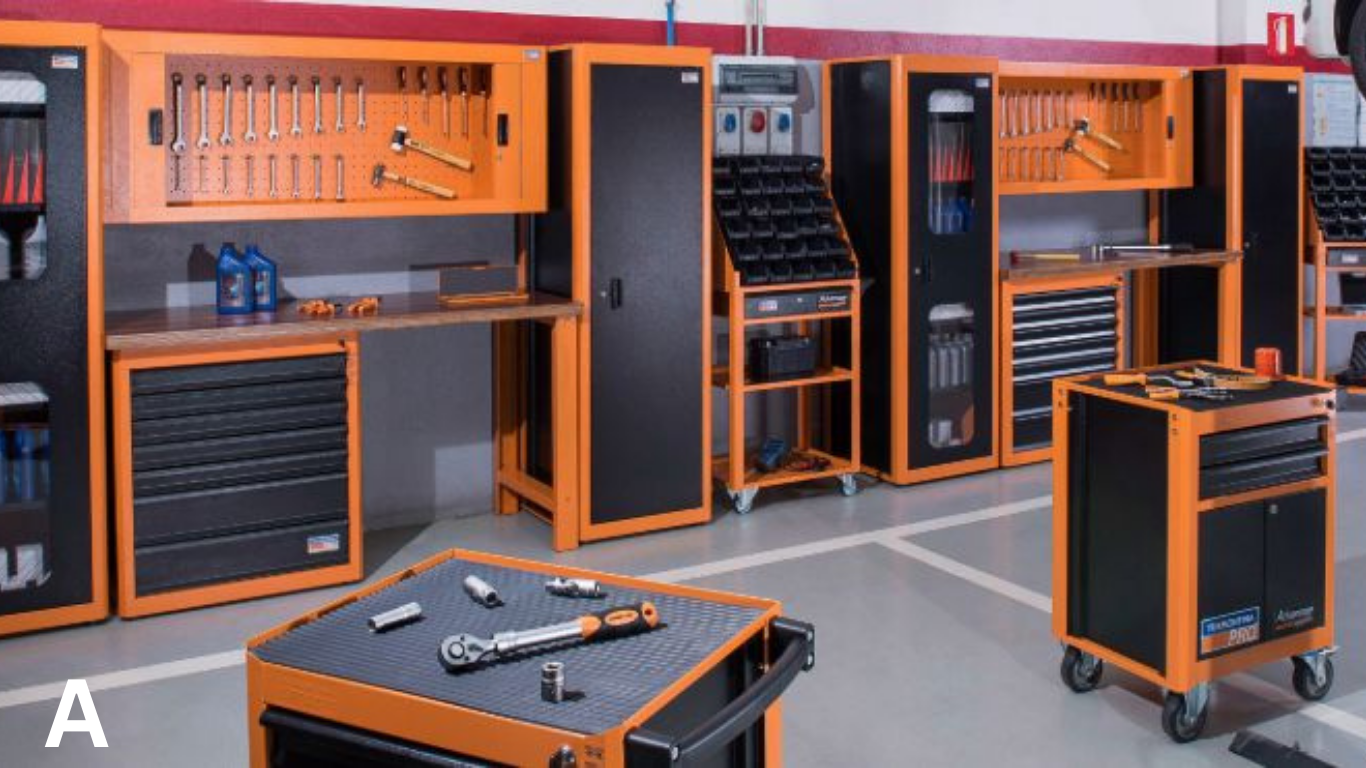
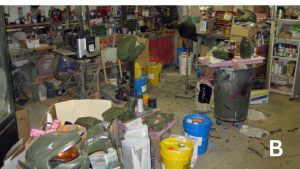
Go on then, tell me which workshop (A or B) you would prefer to work in ? I can wait for the answer ? A well-organized and equipped workshop is crucial for any robotics and automation engineer, it helps to promote a happy workforce and a better, safer working environment. It also shows pride and professionalism in your own skills that should hopefully manifest in to you keeping the automated production lines running. Lets be honest if your workshop is similar to B then something is seriously amiss in your Business Model, A is required for several key reasons, spanning efficiency, safety, and project success: Also from my personal experiences it is advisable to keep Lubricants, oils, greases in a separate area, you want them kept in a clean environment with no chance of getting grinding particles or swarf contaminating them, a lubricants store is a sector in itself.
Efficiency and Workflow
Time-Saving: Robotics involves a vast number of small, specific components (sensors, wires, screws, microcontrollers, etc.). An organized space allows an engineer to quickly find the exact component needed, drastically reducing time wasted searching and maximizing build or troubleshooting time.
Streamlined Troubleshooting: When a robot malfunctions, a cluttered bench makes it difficult to isolate the problem. In a clean environment, it’s easier to trace wires, check connections, and spot misplaced parts or debris causing a short circuit.
Inventory Management: Organization facilitates clear inventory tracking. Engineers can easily see what parts they are low on and reorder supplies before running out, preventing project delays.
Quality and Precision
Precision and Accuracy: Robotics requires precise assembly. Dust, debris, or a chaotic workspace can lead to components being misplaced, incorrect wiring, or contamination of sensitive electronics.
Reduced Errors: A clear workspace helps maintain focus and minimizes the chance of picking up the wrong resistor, using the wrong size screw, or making costly mistakes during intricate assembly.
Component Integrity: Delicate sensors and microelectronics are easily damaged by physical clutter, static discharge exacerbated by poor storage, or accidental spills in a disorganized area. Proper storage ensures components remain in working order until they are used.
Safety and Professionalism
Safety First: Workshops contain hazards like soldering irons, power tools, exposed wiring, and sharp components. A clean bench minimizes tripping hazards, reduces the risk of accidental burns, and ensures clear access to safety equipment like fire extinguishers.
Professional Environment: A tidy workshop reflects positively on the engineer’s work ethic and competence. It inspires confidence in collaborators, clients, and investors that projects are being handled with care and meticulous attention to detail.
In essence, an organized workspace moves from being a mere convenience to a necessity, directly impacting the quality, safety, and timely completion of complex robotics projects.
Introducing the 5s methodology as the cornerstone of an effective workspace.
The 5S methodology originated in Japan in conjunction with the Toyota Production System (TPS), which was developed in the post-war era (1940s-1970s),it incorporates a systematic approach to workplace organization and standardization It is considered a foundational tool of Lean Manufacturing, which aims to maximize value by eliminating waste, key figures involved in the development and popularization of TPS principles, which 5S is built upon, include Taiichi Ohno and Shigeo Shingo .The term “5S” is derived from five Japanese words, each starting with the letter S –
1. Sort (Seiri) – Eliminating Clutter
In Practice:
Go through every tool, component, and piece of equipment.
Ask: “Is this essential for our current/future projects?”
Separate items into “Keep,” “Dispose,” “Donate,” “Move to Storage.”
Operation: Red Tag any items that are broken, obsolete, redundant, or haven’t been used in a set period.
I would just like to say as a cautionary warning, when cleaning down benches and putting items in boxes or discarding them in to trash bins that some Engineers strip items down and like to lay them out in sequence as to how they need to go back together, when people are working shift systems then its not always possible to talk to some one about why the job is laying on the bench as in a dismantled condition. This can be for a variety reasons, ie: no replacement part, a broken or cracked casting or needs passing on to the next shift. I have seen engineers nearly come to blows with “BENCH RAGE” when an overzealous bench cleaner threw away an engineers WIP (work in progress). Obviously a good labelling up system and a SAP or whatever SaaS you are using for breakdown and progress reporting should cover this.
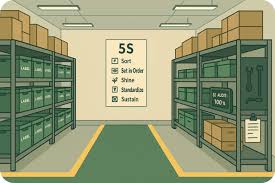
So we are looking good, all tidy, parts are sorted and stored in correct boxes, I wonder how long it will last like that? Well you should conduct a 5s Audit in the workshop daily, and bring any persistent offenders to book immediately.
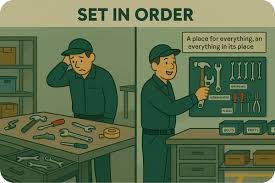
2. Set in Order (Seiton): A Place for Everything
The Principle: Arranging items for easy access and identification.
In Practice:
Tool Shadow Boards/Pegboards: Visual cues for where tools belong.
Labelled Bins & Drawers: For components (resistors, capacitors, screws, nuts, bolts).
Modular Storage: Shelving units, clear plastic drawers.
Designated Work Zones: Separate areas for soldering, assembly, testing, 3D printing.
- Robotics Specifics: Organize development boards by family (Arduino, Raspberry Pi, ESP32), sensor modules by type (ultrasonic, IR, lidar)
An area for use to site a PPM’s board: where a Progress Report can be viewed or W.I.P (work in progress)
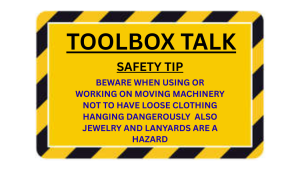
By the way its a good idea to have a separate area for things like Toolbox Talks, where you can have your Powerpoint displays, boards with the latest KPI results and other data to keep the team informed, a separate and well stocked lubricants section that is also subject to strict 5s procedures.. Don’t forget to make an area as a library for machinery Manuals and drawings.
3. Shine (Seiso): Keeping it Clean
The Principle: Regular cleaning and inspection.
In Practice:
Daily Wipe-downs: Work surfaces, soldering stations.
Regular Floor Sweeping/Vacuuming: Prevent dust and small component loss.
Equipment Maintenance: Cleaning 3D printer beds, emptying dust collectors.
“Shine as you go”: Clean up immediately after completing a task.
Robotics Specifics: Cleaning flux residue from PCBs, ensuring optical sensors are dust-free.
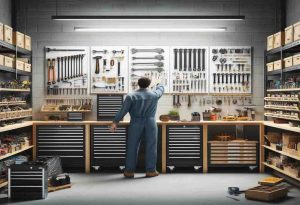
OH that looks an Engineers or Electricians Utopia !!
Essential Tools for the Modern Robotics & Automation Engineer:
Electronics Workbench Essentials:
Soldering Iron & Rework Station
Multimeter & Oscilloscope
Bench Power Supply
Logic Analyser
Component Tester
ESD-safe Matting & Tools
- Usually the electricians will build their own test benches and equipment, this generally evolves over time but as long as there are spare boxes and sockets on the wall the personnel will build them to suit the equipment to be maintained and repaired..
Mechanical & Fabrication Tools:
3D Printer (FDM & Resin if possible)
Hand Tools (Screwdriver sets, pliers, wrenches, wire strippers)
Precision Measuring Tools (Vernier Calipers, Micrometers)
Rotary Tool (Dremel)
Small CNC Mill/Laser Cutter (optional but highly useful)
- Pedestal Drill and a Bench Press are essentials in the workshop. Would just say that in to the workshop should be a very clean Air Supply so that engineers can test Pneumatic valves and controls that are essential for Robotics. (we will cover this as a separate Post )
Computing & Software:
Powerful Workstation(s)
Development Boards (Arduino, Raspberry Pi, ESP32, NVIDIA Jetson)
Debugging Tools & JTAG Programmers
Essential Software: IDEs (VS Code, PlatformIO), CAD software (Fusion 360, SolidWorks), Simulation Software (Gazebo, V-REP), Version Control (Git).
You are going to have a crossover of skills and some computer engineers will mingle with robotic mechanical engineers, this is a normal Team Bonding relationship and everyone helps to keep the Automation running. A good team leader or RME will integrate these skills and get the best out of them for the benefit of the Company.
4. Standardize (Seiketsu): Consistency is Key
The Principle: Creating consistent procedures and practices.
In Practice:
Checklists: For daily/weekly cleaning, tool inventory.
Visual Standards: Color-coding for different component types, consistent labeling throughout the workshop.
Documentation: Simple guides for new team members on workshop organization.
Robotics Specifics: Standardized naming conventions for project folders, consistent pinout diagrams.
5. Sustain (Shitsuke): Making it a Habit
The Principle: Maintaining the 5S principles over time.
In Practice:
Regular Audits: Peer reviews or self-audits to ensure adherence.
Training & Mentorship: Ingraining 5S into the team culture.
Recognition: Acknowledging teams/individuals who uphold standards.
Continuous Improvement: Regularly reviewing and refining the 5S practices.
Robotics Specifics: Holding quick “5S huddles” before or after major project phases.
There are several more items that we can cover relating to specialised Industries like Pharmaceutical or Food/Beverages like good GMP and SOP’s but we will do those in another Post.