

National STEM Learning Centre University of York, Siwards Way, Hessington, YORK, YO10 5DD Tel: +441904 328300 email enquiries@stem.org.uk
It is situated on the University of York campus,just on the edge of the City.
In a world rapidly being reshaped by algorithms and autonomous systems, the greatest challenge facing the UK and Europe isn’t technological—it’s human. The industries of tomorrow, spanning automated manufacturing, smart logistics, and AI-driven healthcare, are desperate for a new kind of professional: the Robotics and Automation specialist. Yet, a profound skills gap looms large. This is where the strategic vision of STEM (Science, Technology, Engineering, and Mathematics) learning initiatives steps in. Far from being a niche academic pursuit, these programs represent a critical economic and social mission. They are the deliberate, high-stakes investment designed to transform education from a traditional system into a precision pipeline, ensuring that the next generation possesses the foundational knowledge, practical skills, and interdisciplinary mindset necessary to not just compete, but lead in the global race for automation dominance.
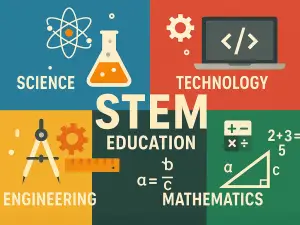

 The Vision: To fuel the Future of Work with STEM Education.
STEM (Science, Technology, Engineering, and Mathematics) learning initiatives across the UK and Europe share a fundamental vision: to secure economic competitiveness and societal well-being by building a robust, skilled, and diverse talent pipeline for the jobs of the future. This is driven by the recognition that advanced technologies, particularly Robotics and Automation, are transforming nearly every sector, from manufacturing and healthcare to logistics and transport.
Core Values and Vision of STEM Initiatives
Empowering Young People: The central vision, as articulated by organisations like the UK’s STEM Learning, is to improve lives through effective STEM education, equipping young people with the skills and knowledge to thrive in an increasingly technological world.
Economic Competitiveness: At the EU level, initiatives aim to make Europe “the place where tomorrow’s technologies… are invented, manufactured and marketed,” directly tackling the identified gaps in productivity and innovation capacity.
Addressing Skills Gaps: A key value is the strategic alignment of education and training with labour market needs, especially in critical technology sectors like AI, semiconductors, and advanced manufacturing.
Inclusivity and Equality: Initiatives actively seek to attract more girls and women to STEM, and promote STEM education as a powerful driver of social mobility, ensuring talent is nurtured from all backgrounds.
Developing 21st-Century Skills: The focus extends beyond pure subject knowledge to skills like critical thinking, problem-solving, resilience to labour market shifts, and digital literacy.
Science and Mathematics: These are the bedrock for understanding the physics, kinematics, and control theory that underpin robotics, as well as the data analysis and algorithms central to AI and automation.
Technology and Engineering: Programs foster practical skills in programming, electrical engineering, mechanical design, and systems integration—the core disciplines for designing, building, and maintaining robotic systems.
Direct Pipeline Roles: This leads directly to careers such as Robotics Engineer, Controls Engineer, AI Developer, and Automation Technician.
 STEM’s Impact on Robotics and Automation Careers
The global push towards the Fourth Industrial Revolution (Industry 4.0), where AI, robotics, and the Internet of Things (IoT) are integrated, is creating a massive demand for new skills. STEM learning is the essential foundation for supplying suitable candidates for these roles.
1. Building Foundational Technical Skills
Science and Mathematics: These are the bedrock for understanding the physics, kinematics, and control theory that underpin robotics, as well as the data analysis and algorithms central to AI and automation.
Technology and Engineering: Programs foster practical skills in programming, electrical engineering, mechanical design, and systems integration—the core disciplines for designing, building, and maintaining robotic systems.
Direct Pipeline Roles: This leads directly to careers such as Robotics Engineer, Controls Engineer, AI Developer, and Automation Technician.
2. Cultivating Multidisciplinary Expertise
Modern robotics is no longer just the domain of pure engineers. STEM initiatives are evolving to promote a multidisciplinary approach, which is crucial for the integration of smart machines into human environments.
STEM Education Focus Career Benefit (Robotics & Automation) Computational Thinking Programming AI, machine learning for perception and decision-making. Ethics & Law Understanding ethical concerns, liability, and safety regulations for autonomous systems. Human-Robot Interaction Incorporating psychology and design principles for user-friendly, trustworthy robots. System Integration Working across hardware, software, and data platforms (e.g., IoT, cloud computing). 3. Bridging the Automation Skills Gap
Both the UK’s “Smart Machines Strategy 2035” and the EU’s strategic plans acknowledge the need for a national Skills Maintenance and Development programme to address the talent gap. STEM learning acts as the primary mechanism for this by:
Early Engagement: Using programmes and STEM Ambassadors to spark interest in robotics and AI at the school level, ensuring a long-term talent flow.
Work-Ready Talent: Fostering partnerships between educational institutions, research organisations, and industry to provide relevant curriculum, apprenticeships, and hands-on experience, preparing students for the real-world application of their skills.
Innovation & Research: Nurturing top STEM talent who can advance the underlying technologies—such as sensors, materials, and advanced AI—that drive the next generation of automation.
In Conclusion
- The values and vision driving STEM learning in the UK and Europe—from promoting inclusion to ensuring economic resilience—are directly linked to the burgeoning sectors of Robotics and Automation. By focusing on deep technical knowledge, interdisciplinary collaboration, and real-world application, these initiatives are not just reforming education; they are deliberately cultivating the specialists, engineers, and innovators who will design, deploy, and manage the intelligent systems of the future. The success of STEM education today is the bedrock for the automated industries of tomorrow. A side effect of this UK pioneered initiative is more jobs advertised relative to the STEM project as the example below shows ——–
Young Engineers Walthamstow delivers hands-on, engaging STEM activities to children aged 6–10 through after-school clubs and weekend events in schools, libraries, and family hubs. We use LEGO® kits and fun engineering challenges to spark creativity and learning.
Role Overview
We’re looking for a passionate and reliable STEM Tutor/Instructor to join our team. You’ll be leading fun, educational sessions using LEGO® kits and simple machines concepts.
Key Responsibilities
- Deliver structured STEM sessions to small groups of children (ages 6–10)
- Set up and pack down materials (LEGO® kits and lesson plans)
- Ensure a fun, safe, and engaging environment for all participants
- Communicate effectively with parents, schools, and team leaders
- Travel to venues in or around Walthamstow (E17)