

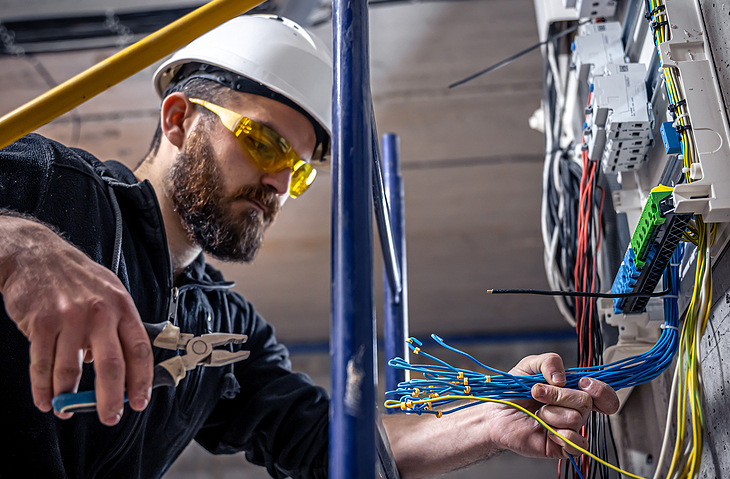

Electricians on the front line checking out the Robotic Arm in the workshop.
Very similar to the training of a Mechanical Fitter in that you will need to serve a 4 years apprenticeship at a proper electrical company and you will probably attend a Training school in the first year then have day release to go to College so that you can get further qualifications. The training involves both on-the-job learning under supervision and theoretical learning,often incorporating distance learning and advanced technologies to meet industry standards. This prepares an apprentice for a career as a qualified electrician. There are generally at least 3 boards in the UK that oversee the Industry standards,
- Joint Industry Board (JIB) / Scottish Joint Industry Board (SJIB):These are the key bodies that set the National standards for the electrotechnical sector. They regulate employment conditions, provide guidance on apprenticeships, and administer the ECS card scheme.
- Managed by the JIB and SJIB, the ECS provides cards that demonstrate a person’s competence and qualifications, which are vital for industry recognition.
- An approved body that registers electricians and contractors, providing a benchmark for their technical competence and safety. They conduct assessments and ensure ongoing compliance with standards
- Represents electrical contractors and is involved in industry development, skills training, and providing resources for employers.
- A partnership of key industry bodies, including the JIB, ECA, and NICEIC, works to drive the skills agenda for the electrotechnical industry.
How They Work Together- The JIB, SJIB, and TESP establish the framework and standards for training and qualifications, like those leading to an ECS Gold Card.
- Electricians and apprentices often seek certification through the ECS card scheme, which is administered by the JIB/SJIB.
- Proof of Qualification: The card verifies your electrical skills and experience to industry standards.
- Demonstrate Health and Safety: It shows you meet the required health and safety standards for the role.
- Site Access: Many construction sites require workers to have an ECS card to gain access. An electrician needs an Electrotechnical Certification Scheme (ECS) card to get employment in the UK, as it is the industry-standard ID and competence card for proving qualifications, skills, and health and safety awareness. You will need to apply for the relevant card that matches your qualifications and experience, such as an ECS Gold Card for a qualified electrician, to demonstrate your competence for various roles and sites.Why you need an ECS Card:
- Proof of Qualification: The card verifies your electrical skills and experience to industry standards.
- Demonstrate Health and Safety: It shows you meet the required health and safety standards for the role.
- Site Access: Many construction sites require workers to have an ECS card to gain access.
How to get an ECS Card:- Determine your qualifications: Identify the specific ECS card that aligns with your level of training and experience. The ECS Gold Card is often necessary for fully qualified electricians, according to Trade Skills 4U.
- Complete necessary assessments: You may need to undergo specific assessments, such as the Electrotechnical Experienced Worker Assessment (EWA) if you have non-UK qualifications, says ECS.
- Apply online: You can apply for your ECS card directly through the ECS website- https;// www.ecscard.org.uk
NICEIC and other bodies then use these standards to assess and register electricians and their firms, confirming their competence to the public.
Electricians and electronics engineers both play crucial, yet distinct, roles in the field of automation and robotics. The work available for each profession focuses on their respective areas of expertise: practical installation and maintenance for electricians, and design and development for electronics engineers. There is also a very big ongoing demand for Electricians to work in the construction and upgrading as part of the Governments Critical National Infrastructure (CNI).scheme for Data Centres, to this end it maybe that further training modules could be required to join this ” Gold Rush “.
Electricians specializing in automation and robotics are often referred to as automation electricians, industrial electricians, or robotics technicians. Their work is primarily hands-on and focuses on the physical installation, wiring, and maintenance of automated systems.
Installation and Wiring: They are responsible for the physical installation of robotic and automated equipment. This includes wiring control panels, motors, sensors, and other components according to schematics and safety codes.
Maintenance and Troubleshooting: A large part of an automation electrician’s job is to keep systems running smoothly. This involves routine maintenance, diagnosing electrical faults, and troubleshooting issues with wiring, power supplies, motors, and sensors.
PLC Programming: Many industrial electricians are skilled in programming Programmable Logic Controllers (PLCs), which are the “brains” of most automated machinery. They write and modify code to control the sequence of operations for robots and other equipment on a production line.
System Integration: They work with engineers to integrate new automated systems into existing facilities, ensuring all electrical components are correctly connected and commissioned.
Electronics Engineers in Automation and Robotics
Electronics engineers in this field are focused on the design, development, and control of the electronic components and systems that power robots and automated machinery. Their work is often more theoretical and involves a deep understanding of circuits, microcontrollers, and software.
Hardware and Circuit Design: They design the electronic circuits and hardware for robots, including printed circuit boards (PCBs), power distribution systems, and sensor interfaces. This work ensures the robot’s components can communicate and function correctly.
Embedded Systems Development: Electronics engineers develop the embedded systems and firmware that control a robot’s core functions. This involves programming microcontrollers and other processors to manage tasks like motion control, data processing, and communication.
Sensors and Actuators: A key part of their job is to select and integrate sensors (like cameras, LiDAR, and proximity sensors) for a robot to perceive its environment and actuators (motors and servo-drives) for it to move and perform tasks. They design the electronic interfaces that allow these components to work seamlessly.
Control Systems Engineering: They design and implement the control systems that govern a robot’s behaviour, ensuring precise and stable movements. This can involve writing algorithms for feedback control and developing the software that allows for autonomous operation. Moving from the high-level design of a robotic system to its physical realization requires more than just technical knowledge—it requires the right hardware in your hand. Whether you are an electrician scaling power distribution for a factory floor or an electronic engineer debugging a logic board, your diagnostic tools are the bridge between a theoretical circuit and a functional machine..
- In the high-stakes world of automation, where a single faulty sensor can halt an entire production line, “guessing” isn’t an option. Precision is the industry standard. Assembling a toolkit for robotics isn’t just about collecting wrenches and drivers; it’s about investing in the diagnostic eyes that allow you to see invisible electrical signatures. To ensure your builds are safe, efficient, and up to code, you need a multimeter that matches the sophistication of the robots you’re maintaining.
The Electrical Professional’s Choice: Fluke Multimeters
- When accuracy is non-negotiable, industry veterans turn to Fluke. Below is our curated selection of Fluke multimeters, categorized by their specific strengths in the robotics and automation sectors:
Model Primary Use Case Key Feature Fluke 87V Industrial Automation Low-pass filter for accurate voltage on variable speed drives. Fluke 117 Electricians/Commercial Non-contact voltage detection for fast, safe scanning. Fluke 289 Electronic R&D Advanced logging and graphing to catch intermittent glitches. Fluke 179 General Maintenance Rugged, True-RMS precision for troubleshooting complex systems. To bridge the gap between these two vital roles, it helps to tailor the toolkit to their specific “battlefields.” While both need precision, the electrician is often battling high-voltage transients in a control cabinet, while the engineer is chasing micro-currents on a PCB.
Here is a breakdown of how these Fluke models serve each persona:
To bridge the gap between these two vital roles, it helps to tailor the toolkit to their specific “battlefields.” While both need precision, the electrician is often battling high-voltage transients in a control cabinet, while the engineer is chasing micro-currents on a PCB.
Here is a breakdown of how these Fluke models serve each persona:
For the Electrician: Power & Reliability
In the world of heavy automation, you are the guardian of the power supply. You need a tool that can survive a drop, resist dust, and accurately read noisy signals coming off large motors.
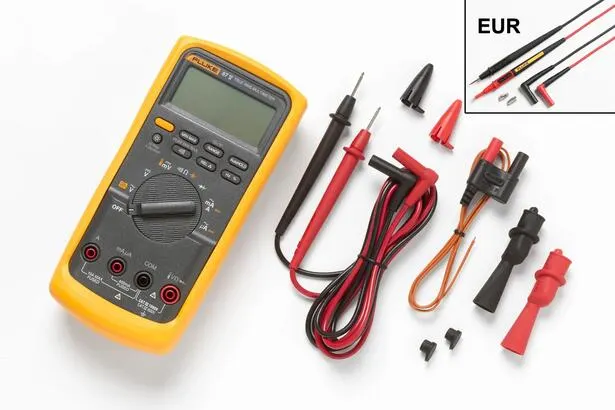
Fluke 87V: The “Gold Standard.” Its low-pass filter is essential for troubleshooting Variable Frequency Drives (VFDs) that power robotic arms.
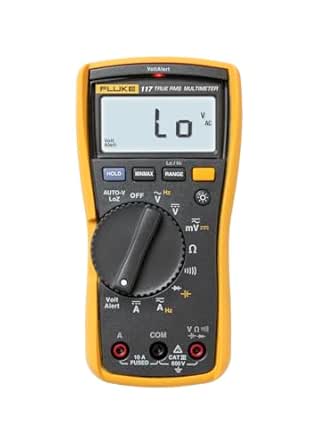
Fluke 117: Perfect for rapid-fire maintenance. The VoltAlert™ technology lets you detect live wires without even touching them, keeping you safe during quick diagnostic rounds.
For the Engineer: Data & Detail
Your work begins where the power meets the logic. You aren’t just looking for “on or off”; you’re looking for trends, signal noise, and the “why” behind a system failure.
Fluke 289: This is more than a meter; it’s a data logger. It can store thousands of readings and graph them on-screen, allowing you to walk away and catch those elusive “ghost” glitches that only happen once every three hours.
Fluke 179: A versatile powerhouse for the R&D lab. With a built-in thermometer and True-RMS accuracy, it provides the precise thermal and electrical data needed to validate new robotic prototypes.
Role Recommended Model Best For… Electrician Fluke 87V VFDs, Motor Controllers, & High-Voltage Cabinets Electrician Fluke 117 Rapid Troubleshooting & Safety Scanning Engineer Fluke 289 Bench Testing, Data Logging, & Intermittent Faults Engineer Fluke 179 Component Testing & Thermal Monitoring To wrap things up
Ready to Upgrade Your Diagnostic Power ?
Whether you are commissioning a new automated line or debugging a complex robotic interface, your results are only as reliable as your measurements. Don’t leave your career—or your safety—to chance with “budget” hardware.
- We may earn a small commission as an Affiliate program member at no extra cost to yourselves.
| Image | Product | Features | Review The Prices |
FLUKE 87V Multimeter |
Fluke 87V Max True-RMS Digital Multimeter with Solar Test Lead Kit, CAT III 1000v Rated Multimeter. |
||
FLUKE 117 Multimeter |
Fluke 117 Electrician's Ideal Multimeter with Non-Contact Voltage |
||
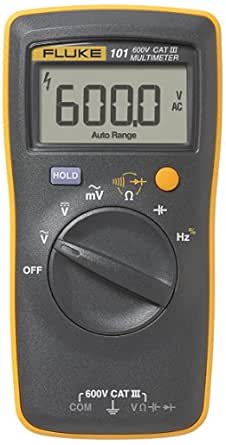
FLUKE 101 Multimeter |
Fluke 101 Pocket Digital Multimeter |

Editorial Note & Research Disclosure:
This guide was developed through extensive technical research, analysis of manufacturer specifications, and a review of professional feedback from industrial maintenance communities. While we have not personally “stress-tested” every unit in this list to destruction, our recommendations are based on their compatibility with specific robotic maintenance standards (such as pressure limits and volume control). Our goal is to aggregate the most relevant data to help you make an informed decision for your facility.