

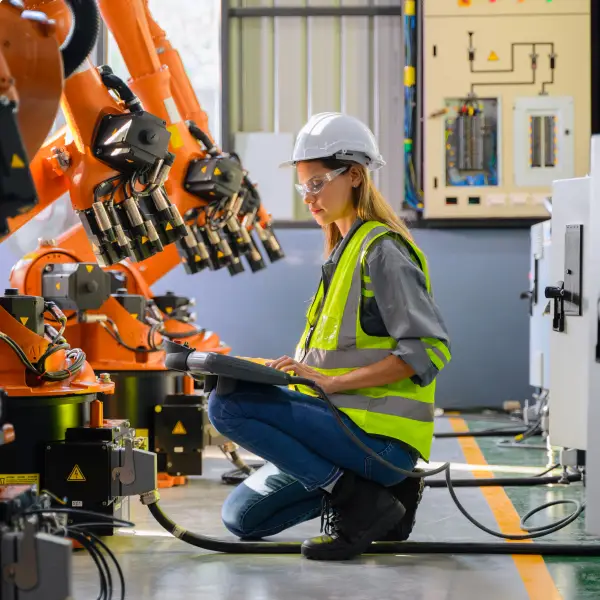
A well-structured Planned Preventative Maintenance (PPM) scheme is absolutely critical for the long-term success of any robotics and automation project.
Here is a breakdown of the key points that require emphasising as to the importance of a substantial and relevant PPM scheme.
Why PPM is Non-Negotiable in Robotics and Automation
A robotics or automation system is a high-speed, high-precision asset. Unlike reactive maintenance (fixing things after they break), Planned Preventative Maintenance (PPM) focuses on scheduled inspections, adjustments, and component replacements to prevent failure before it occurs. Don’t forget a very active Lubrication and greasing schedule is a critical component of the PPM scheme, in my personal experience sometimes it is just paid lip service to and those well hidden bearings behind guards are often overlooked, make them a very special case.
The High Cost of Failure (and the Value of Prevention)
The core argument for a strong PPM scheme rests on the massive financial and operational penalties associated with unplanned downtime.
Financial Impact:
Lost Production: For high-volume automated lines, an hour of downtime can cost tens of thousands of dollars in lost throughput.
Expedited Repairs: Rush orders for replacement parts, overtime for maintenance crews, and emergency service call-outs are always more expensive than planned work.
Operational Impact:
Quality Issues: Failing components (like a worn end-effector, or misaligned sensor) can lead to product defects, scrap, and rework, compromising the return on investment.
Safety Risks: Equipment running outside of its optimal parameters poses an increased risk of catastrophic failure, which can create a serious safety hazard for personnel.
Characteristics of a Substantial and Relevant PPM Scheme
The “substantial and relevant” part is key. A generic maintenance schedule from a manual won’t cut it for a bespoke automation system. A strong scheme must be:
1. Data-Driven and Condition-Based
Not Just Time: While fixed time intervals (e.g., every 500 operating hours) are a good start, the best PPM schemes use Condition Monitoring.
Predictive Maintenance (PdM): Leveraging sensors for vibration analysis, temperature monitoring, and current draw allows maintenance to be scheduled precisely when a component shows early signs of degradation, maximizing its lifespan without risking failure.
2. Tiered and Comprehensive
A complete scheme must account for all system levels, often broken down into Tiers (or Levels):
| Tier | Focus | Examples of Tasks |
| Level 1 (Operator/Daily) | Quick, non-invasive checks | Visual inspection for leaks, checking for abnormal noise, clearing debris. |
| Level 2 (Weekly/Monthly) | Light maintenance, inspection | Greasing points, checking and cleaning sensors and cameras, verifying tool calibration. |
| Level 3 (Quarterly/Semi-Annual) | Deep inspection, minor replacement | Checking belt tension, battery replacement in robot controllers, torqueing critical bolts. |
| Level 4 (Annual/Biennial) | Major overhaul, critical replacement | Replacing harmonic drives/gearboxes, hydraulic fluid flushing, laser calibration of linear axes. |
3. Integrated with Spare Parts Management
A relevant PPM scheme dictates the necessary inventory. Critical, long lead-time parts (like robot CPUs or specialized motors) must be stocked in advance of their expected failure point, based on historical data and manufacturer recommendations.
The Long-Term ROI
Investing in a robust PPM plan shifts the mindset from maintenance as a cost to maintenance as an investment.
Extended Asset Life: Regular lubrication and timely component replacement prevent excessive wear, significantly extending the operational life of expensive assets like the robot arm itself or custom tooling.
Optimized Performance: Regular calibration and tuning ensure the system maintains the high precision and speed it was designed for, protecting your initial investment and ensuring consistent product quality.
Predictable Budgeting: By planning maintenance, costs are spread out and predictable, eliminating the wild financial swings associated with emergency breakdowns.
Conclusion: Make Maintenance a Core Project Deliverable
A substantial and relevant PPM scheme should not be an afterthought; it should be a core deliverable of the entire automation project. By prioritizing planned maintenance, you secure the longevity, reliability, and profitability of your robotics investment for years to come but a robust PPM schedule is worthless if the maintenance and operations teams aren’t properly trained to execute it. Training is the human factor that directly translates the plan’s potential into actual machine uptime. It is also vital and often overlooked that the Technicians are supplied or have available to them any special tooling that is required to successfully carry out the PPM’s beyond their normal personal tool kits. It is always advisable to talk to the manufacturers and suppliers, especially I find it most informative to talk to the skills who work on the machines rather than the designers or sales people.
1. Role-Specific Training is Essential
Training must be tailored to the specific roles and responsibilities within your operation, recognizing that a robot operator needs different knowledge than a controls engineer.
Operator Training (Level 1 PPM): Focus on daily/shift checks, identifying abnormal sounds or vibrations, correct shutdown/start-up procedures, and basic fault clearing (e.g., clearing jams). This empowers them to be the first line of defence.
Maintenance Technician Training (Level 2 & 3 PPM): This is the most crucial group. Training must cover detailed diagnostics, safe isolation (Lockout/Tagout,LoTo), component replacement procedures (e.g., replacing a belt or sensor), proper lubrication techniques, and using specialized diagnostic tools.
Engineering/Controls Training (Level 4 & Diagnostics): Focus on software backups, network configuration, advanced fault finding, robot teach pendant programming for offsets, and in-depth understanding of the safety system logic.
2. The “Why” Before the “How”
Effective training doesn’t just teach the steps (the “how”); it emphasizes the consequences of inaction (the “why”). When a technician understands that missing a lubrication point on a linear axis could lead to $15,000 in damage, they are more likely to follow the schedule diligently.
3. The Importance of Documentation and Backups
A PPM scheme relies on current, accessible information,
System Documentation: The core of training should be the structured maintenance manual, detailing not just what to do, but the required tools, PPE, and time estimate for each task.
Software Backups: A critical, often-overlooked PPM step is performing regular backups of the robot programs, PLC logic, HMI screens, and safety controller configurations. A hardware failure can be resolved quickly if the software brain is immediately restorable. This step must be clearly defined in the highest tier of the maintenance plan.
4. Certification and Refresher Courses
Since technology evolves and staff turnover occurs, the PPM scheme must include a cadence for reassessing skill levels:
Certification: Ensure technicians are certified on key equipment, especially proprietary robot systems (e.g., FANUC, KUKA, ABB).
Refresher Training: Schedule mandatory refresher courses annually or biennially to reinforce safety procedures and introduce changes to the system or maintenance methodology.
The vital link between a great PPM plan and reliable, productive automation especially incorporating a critical lubrication schedule involves well trained personnel.