

From Interest to Pre-Installation Planning
Before we arrive at the pre-installation meeting or sometimes called the pre-mob meeting we have to comprehend the amount of work that gets us to this important point in the birth of a new Automated production line or even a partial upgrading of an existing line to bring it to modern standards and speeds.
1. Discovery & Requirements Gathering
The process begins with the User Requirement Specification (URS). The client defines what they need the line to achieve—speed, throughput, footprint, and specific product specs. You aren’t just selling a machine; you’re solving a bottleneck.
2. Conceptual Design & Feasibility
Once the requirements are clear, the engineering teams collaborate on a proof of concept.
Layout Drafting: Fitting the line into the existing facility (CAD drawings).
Feasibility Studies: Determining if the desired cycle times are physically possible.
Budgeting & ROI: Finalizing the quote and getting the client’s “Green Light” (Purchase Order).
3. Detailed Engineering & Procurement
This is where the “heavy lifting” happens behind the scenes.
Mechanical & Electrical Design: Finalizing every sensor, motor, and bracket.
Long-Lead Ordering: Sourcing specialized components (PLCs, robotics, custom tooling) that can take months to arrive.
Software Development: Writing the logic that will eventually govern the automation.
4. Build & FAT (Factory Acceptance Testing)
The line is physically built and integrated—but at your facility (or the OEM’s), not the client’s.
The client visits to witness the FAT.
The line is run under simulated production conditions to prove it meets the URS.
Sign-off: Once the FAT is passed, the line is decommissioned, crated, and shipped.
5. Site Readiness
While the machine is in transit, the focus shifts to the client’s floor. This involves:
Utility drops (Power, Compressed Air, Data).
Floor levelling and clearing the “envelope.”
Safety zoning.
The Transition to Pre-Install
Once the crates are on the client’s dock (or en route) and the site is prepped, the “Theory” phase ends and the “Reality” phase begins.
This is exactly where your Pre-Installation Planning Meeting sits. It serves as the final handshake to ensure that when the technicians pick up their wrenches, there are no surprises regarding safety, schedules, or logistics.
Note: The biggest risk in this transition is “Scope Creep” —where the client tries to change a requirement after the FAT but before the install. The pre-install meeting is your best tool to lock down the final plan.
Meeting Agenda for Physical Installation
Keeping things professional and efficient, your opening should acknowledge the hard work done during the design and FAT phases while pivoting the team’s mindset toward the physical build, Here is a concise agenda and a “scene-setting” opening statement to kick off the meeting.
” Thank you to you all for attending this very important meeting, the good news is that we have collectively and successfully moved through the design, build, and FAT phases, and the project is now transitioning from a concept to a physical reality on the shop floor. The goal of today’s meeting isn’t to revisit the engineering specs—we’ve already proven those.
Today is about logistics, safety, and timing. We want to ensure that day one of the install is seamless and that we’ve accounted for every physical variable on-site.”
“Before we go any further I would like to introduce the following person who is going to be the most important person on the site (for both sides)) the Point of Contact (POC). “
The Pre-Mobilization Agenda
1. Logistics & Access
Delivery Windows: When are the trucks arriving? Is there a loading dock height mismatch?
Staging Area: Where does the equipment sit before it’s installed? (You don’t want 20 crates blocking an active fire exit).
Rigging: Who is providing the forklift/crane? Is the floor rated for the point load of the machinery?
2. Utility & Infrastructure Verification
Power: Are the drops labeled and tested? (Voltage, Amperage, and Phase).
Data: Is the industrial network isolated from the office Wi-Fi? Are IP addresses pre-assigned?
Air/Vacuum: Is the PSI and CFM (flow rate) sufficient for peak demand?
3. Safety & Permitting
LOTO (Lockout/Tagout): Who has the keys to the main breakers?
Hot Work: Will there be welding or grinding that requires a fire watch?
PPE Requirements: Does the vendor team have the right gear for your specific site?
4. The “Handshake” Protocols
Change Order Process: Who has the authority to approve an on-the-fly design change?
Daily Recap: Set a time (e.g., 4:00 PM) for a 10-minute stand-up to discuss progress and “blockers.”
So to re-cap this part of the proceedings
Concise Meeting Agenda
| Item | Topic | Primary Goal |
| 1 | Site Access & Logistics | Confirm dock availability, staging areas, and forklift paths. |
| 2 | Utility Verification | Ensure power, air, and data drops are exactly where they need to be. |
| 3 | Health & Safety (HSE) | Review Lock-out/Tag-out (LOTO) and any high-risk work permits. |
| 4 | The ‘Hand-off’ Schedule | Identify the specific moment production hands the floor over to the install team. |
| 5 | Contingency Plan | Brief “What if?” for shipping delays or missing components.\ |
The “Must-Ask” Checklist for Vendors
If you want to put your vendors on their toes (in a good way), ask these three questions:
“What is the longest ‘lead-time’ item on this BOM (Bill of Materials)?” * Why: If a critical sensor breaks during install and it takes 6 weeks to ship, you need a backup plan now.
“Who is the single point of contact for software bugs versus mechanical failures?”
Why: You don’t want the mechanical guy blaming the programmer while the line sits idle.
“What does ‘Done’ look like for you?”
Why: Does “Done” mean the robot moves, or does it mean the line hits its rated Cycle Time (Parts Per Minute) for 8 hours straight? Define Acceptance Testing early.
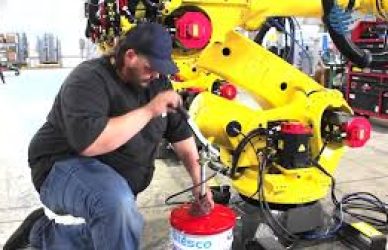
 Project Director looking well pleased with himself to get this far .
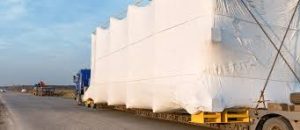
Sometimes a specialist lifting and machinery mover may be used to place a large object in its correct location.
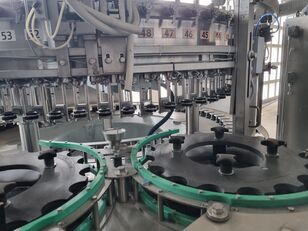
Right so all is going to the Strategic plan, dates and timetables are on schedule, we get the news that largest pieces of equipment will be docking Friday in the UK and will be with us first thing Saturday morning , as you can see from the first image there were some big lumps. The crane people were there on time and machine lifted off the wagon. We sprang in to action as with it been Saturday we had hope of an earlier finish.
We broke of all the sides off the wooden crate with the plan to leave it on the bottom pallet and use hand trucks to get it through the warehouse and into the production and bottling hall. We would then Jack the machine up to get it off its pallet ( the other lines were producing 24/7 so we could not take fork trucks or crane into that area), so far so good , through the outer doors, secondary door then aah…, “Are you sure that will go through there ” its all been measured apparently. Obviously not measured well enough, first we took the Door Protection barriers away, no not enough, some ancillary pipework off the machine, no still no go, jacked the machine up earlier than planned and put onto Skates to get rid of the pallet……… no still no go, in the end we had to strip pumps and valves off which ok doesn’t sound much but anyone who has had aligning pumps experience knows it can take a long time to achieve accuracy and get it rechecked off.
It was a Late One but we managed to get it in position and on its centre lines which was the original task of the day, boxed a bit of the machine back up and left the pumps for a later date. The 4 metre door was still in tact and the original 5 metre machine was located.
Conclusion
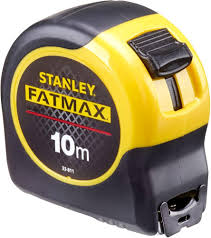
Don’t assume that the Project Engineer who did the original quotation had one of these, or maybe he had but was not sure how to use it !!