
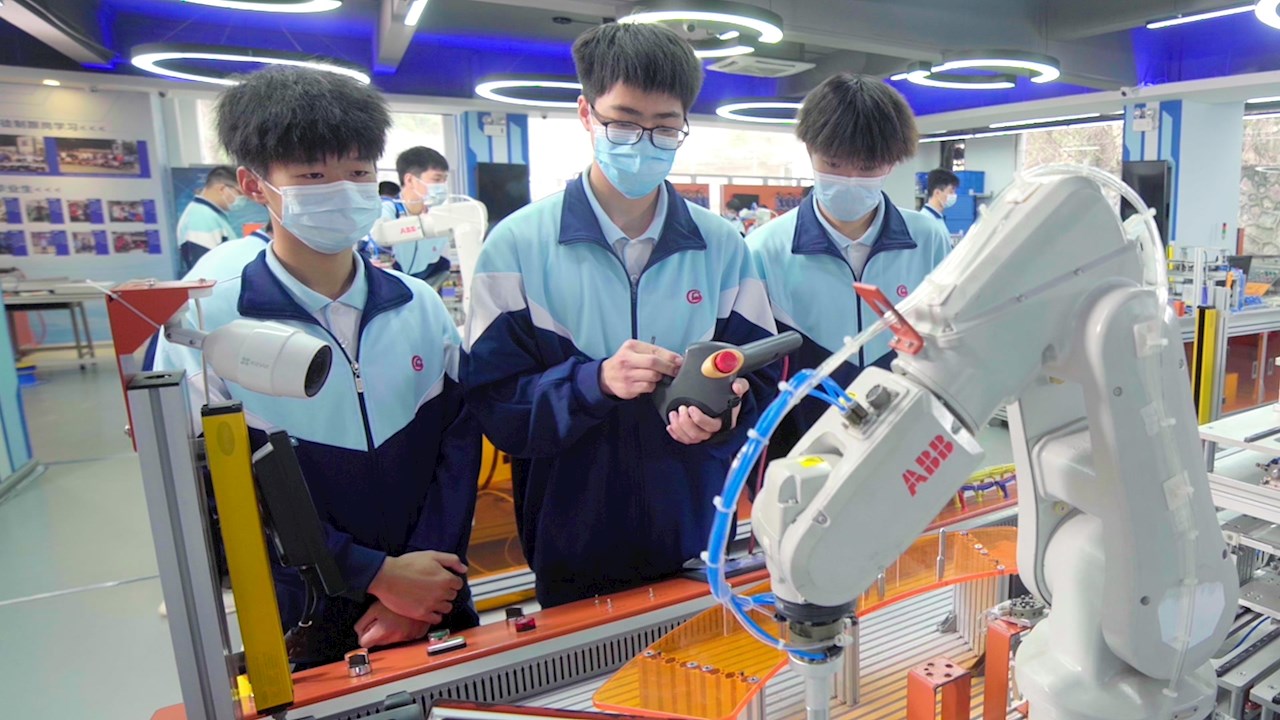
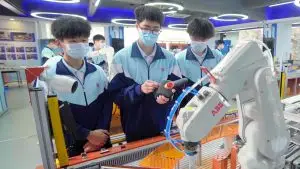
Students at the ABB training school.
To start as a robotics and automation apprentice, you need a high school diploma or equivalent, strong problem-solving skills, and have demonstrated an interest in the field through hobbies or basic training. The best path is to gain foundational skills through trade school, a 2-year degree, or online courses, and then seek out apprenticeships from companies like Amazon that offer hands-on training and mentorship, which will provide job-specific skills, experience, and qualifications. There are numerous robotics and automation apprenticeship schemes available in the UK, offered by a wide range of employers, from major corporations like Rolls-Royce and Jaguar Land Rover to engineering consultancies, tech companies, and smaller specialized firms. These programs can be found through official apprenticeship search portals, employer websites, and job sites like Indeed, and they cover various skill levels and specializations.
Develop Foundational Skills and Knowledge
- Gain practical experience: Start a personal robotics hobby to build a portfolio. Experiment with robotics kits, learn basic coding, and try to build a prototype. Start building yourself a relevant Tool Kit so that you feel comfortable using ths tools that combine to make this a worthwhile career.
- Focus on core skills: Develop mechanical aptitude, basic programming knowledge, and a methodical problem-solving mind set. These are critical for diagnosing and troubleshooting issues with automated systems.
- Get the right education: Enrol in a 2-year degree or trade school program in a related field like robotics, automation, or control technology. Many apprenticeships also require foundational knowledge in subjects like Maths and English, and higher-level ones might need A-levels in STEM subjects. This is a relatively new initiative and is a very encouraging education program towards careers in Robotics ( we shall cover this subject in a further blog as it is a very important development).
Find and Apply for an Apprenticeship
- Search for programs: Look for apprenticeship programs offered by companies in your area or by large manufacturers in sectors like automotive or aerospace, as they often have well-established schemes. Websites like RoboticsCareer.org offer tools to search for specific programs.
- Apply directly: Many companies have online application portals for their apprenticeships. Be prepared to go through a formal application and selection process.
- Highlight relevant experience: Emphasize any hands-on experience, personal projects, or extracurricular activities that demonstrate your interest and aptitude for robotics and automation, even if you don’t have a formal engineering degree yet.
What to expect in an Apprenticeship
Paid training: Apprenticeships are typically paid. You will receive a salary from day one, with potential for increases as you progress, plus
- Structured learning: You will combine classroom instruction with hands-on, on-the-job mentorship from experienced professionals. This is often part of a structured program that includes earning industry-recognized certifications.
- Job placement: Upon successful completion of the program, you can transition into a full-time role within the company. For example, the Amazon RME Mechatronics & Robotics Apprenticeship guarantees a full-time role upon completion.
Types of Apprenticeships and roles
- Robotics Engineer:These degree-level apprenticeships provide a comprehensive education in robotics, from mechanical and electrical engineering to AI and ethics, and are offered by universities and companies like Cranfield University.
- Maintenance Technician:Focuses on maintaining, repairing, and servicing automated machinery, including
- robotics, often with an electrical or multi-skilled bias.
- Automation & Controls Engineering Technician:A Level 4 apprenticeship that covers the technical aspects of automation and control systems.
Where to find them
- Official Apprenticeship Service:Use the government’s Find an apprenticeship service to search for specific roles and training providers.
- Employer Websites:Check the career pages of large companies in manufacturing, automotive, aerospace, and tech, such as Rolls-Royce, Jaguar Land Rover, and Siemens.
- Job Boards:Websites like Indeed have dedicated sections for apprenticeship and robotics-related roles.
- Industry Clusters and Associations:Groups like Automate UK are working to increase the number of apprenticeships in the sector.
- Universities:Some universities offer their own degree apprenticeships in collaboration with industry partners.
What to expect
- Diverse environments:You could work in a large manufacturing plant, an engineering consultancy, a university research lab, or a tech company.
- Practical and academic learning:Apprenticeships combine hands-on work experience with academic study, often leading to a recognized qualification, such as a degree apprenticeship.
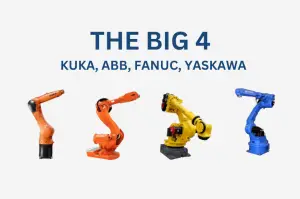
- Varying responsibilities:Tasks can range from building and testing robots to programming them, performing maintenance, and conducting R&D.Another very good option would be to get in touch wit the “Big 4” Robotics Manufacturers, these companies have Head Offices in the UK and in most of the countries in Europe, that is also true of the big Logistics companies were Automated Factories are now the norm,.
Companies with UK offices and apprenticeship programs
The “Big 4” robotics companies
- The “Big 4” in industrial robotics (ABB, Fanuc, Kuka, and Yaskawa) do have operations in the UK, though information on their specific apprentice/intern programs can be harder to find publicly than for larger tech firms.
- It is recommended to check the career pages of individual companies for the most up-to-date information on their program
Other significant Companies
- Google: Google has a significant presence in the UK with apprenticeships available that provide real-world experience and training.
- Amazon: Amazon offers a variety of apprenticeships across the UK in different locations, including corporate offices and fulfilment centres.
- IBM: While not a direct robotics company, IBM offers placements, internships, and apprenticeships, including degree apprenticeships in Digital & Technology Solutions, and is a major tech player.
CONCLUSION
NOW would appear to be a great time to be looking for a Career in the Robotics & Automation industry, as the forecast reduction in white collar jobs materialises due to AI building, repairing, building and programming Robotics will become an even more lucrative career path. An early introduction in the STEM initiative would be a good path to achieve this. Writing and detailing your CV to these opportunities is vitally important so get stuck in and make yourself STAND OUT from the crowd.