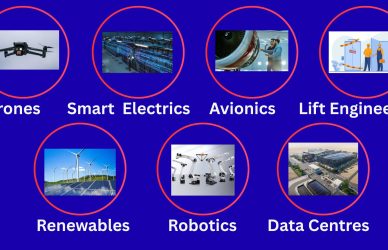


There has been several articles lately about the Second Industrial revolution and how this will fuel a rise in the status of Blue-collar workers, especially those that will be working in the fields of Robotics & Automation and also those that are instrumental in the building of Data Centres for the AI boom. A similar prophet to me has forecast “In the next 10 years, skilled labour is going to become the most valued positions in the entire market”. “AI can’t wire a panel, run conduit, or weld a beam in the rain”. ” When a data centre needs power, when a city needs new infrastructure, when the lights go out, you’re not calling ChatGPT, you’re calling an electrician, an engineer, a plumber, an iron worker, a lineman “. The same can said to be true in factories which are operating Robotics and Automation, these are all very well when running efficiently but as with all mechanical and electrical equipment faults happen and parts need replacing, the blue-collar person is required again. The prospects for blue-collar skilled workers in the fields of automation and robotics in the UK and Europe are strong, but the nature of the jobs is shifting. While automation may reduce demand for traditional manual labour, it is creating new, more technical roles that require different skills. Workers who can adapt and retrain will find significant opportunities for career advancement and competitive salaries.
Career Prospects
The demand for skilled workers in automation and robotics is on the rise across the UK and Europe. Rather than replacing all jobs, automation is accelerating a shift in the skills needed by the workforce. The focus is moving from purely physical tasks to the maintenance, operation, and programming of automated systems.
New Roles: The most promising career paths for skilled blue-collar workers are in roles such as:
Robotics Technician: Installing, maintaining, and repairing industrial robots.
Automation Engineer/Technician: Designing, programming, and troubleshooting automated systems on production lines.
Field Service Engineer: Providing on-site support and maintenance for robotics and automation equipment at client locations.
AI ‘Trainers’ and ‘Explainers’: New, emerging roles that involve performing tasks to train AI systems and interpreting their outputs.
Key Skills: To succeed in this evolving landscape, workers need to acquire new skills. The demand for advanced technological skills (like programming and IT) and higher cognitive skills (such as critical thinking and problem-solving) is increasing. Additionally, social-emotional skills like teamwork and communication are becoming more important as human-machine interaction becomes the norm. This shift highlights the value of continuous learning and reskilling.
Salary Outlook
Salaries for skilled workers in this sector are generally higher than the national average, reflecting the specialized knowledge and skills required. The exact pay can vary significantly based on experience, location, and the specific industry (e.g., manufacturing, logistics, or pharmaceuticals).
UK Salary Averages:
Robotics Engineer/Automation Technician: Average salaries in the UK range from £40,000 to £55,000 per year.
Entry-level: A starting salary for an automation or robotics technician can be around £25,500 to £31,000, with a mid-career average of about £37,000.
Senior/Experienced: Senior-level roles, especially in specific locations with high demand like Oxford or Bristol, can command salaries of £58,000 to over £90,000 annually.
European Context: While salary data varies by country, the trend is similar. Countries with strong manufacturing sectors, like Germany and Sweden, have a significant need for skilled workers in automation. However, in some regions, a lack of investment in technological innovation has led to lower wages for engineers, making it a key challenge for the European labour market. The overall outlook remains positive for those with the right skills, as companies and governments recognize the need to invest in automation to maintain competitiveness and address a declining working-age population
WHY A SKILLS SHORTAGE THROUGHOUT EUROPE ?
- I believe that in the UK at the end of the 1970’s there was a crackdown on the Trades Union powers in the Manufacturing sector, this meant that the sector became less popular, there was a lot of Industrial action by the workforce, this resulted in manufacturing becoming an unpopular place to invest money, UK embarked on making more money buying shares of former Nationalised Companies especially the big Utility companies involved in Water, Gas, Electricity, Rail, Telephones, and all the family silver. Catchy adverts were used to get the public involved, most of the assets were undervalued so the shares went up in price and Joe Public made his profits. I wonder who owns the Utility Companies now ?
- The result was a declining British Manufacturing base, once the envy of the world, the knock on effect was less opportunities for engineering and electrical apprenticeships, and now as the workforce has aged there is no one to pass on their skills, a lot of skilled trades people became disillusioned with their poor wages and prospects so opted to seek work in other fields,
- Another factor is an aging workforce, again many skilled tradesmen are reaching retirement age, and there aren’t enough younger workers to replace them. Stigma surrounding trade careers: Society often places a higher value on college degrees, causing many young people to overlook trade careers.
- The Rest of Europe also has a skilled worker shortage due to a combination of an aging population, a mismatch between education and the evolving job market, and the demand for new skills created by technological advancements like AI and the green transition. These factors are exacerbated by issues like unappealing working conditions in some sectors, low intra-EU mobility, and inefficient recruitment processes.
- DEMOGRAPHIC CHANGES
- Aging workforce: The population is aging, with many skilled workers reaching retirement age without enough new workers entering the workforce to replace them.
- Shrinking working-age population: The overall working-age population in the EU is projected to decline, creating a shrinking pool of potential workers.
MISMATCH IN SKILLS AND EDUCATION
- Educational systems: Education and training systems are struggling to keep up with the rapid changes in job requirements caused by new technologies, leading to a gap between the skills workers have and the skills employers need, the STEM initiative is seeking to turn this situation around.
- Digital and green transitions: The push for new technologies and sustainable practices is creating demand for new skill sets that are not yet adequately covered by the current workforce.
- Stagnant mobility: Low levels of mobility within the EU make it difficult for workers to move to where the jobs are located.
- WORKPLACE AND RECRUITMENT ISSUES
- Poor working conditions: Certain in-demand sectors, like transportation and healthcare, suffer from unappealing working conditions, which discourages new talent.
- Ineffective hiring: Outdated recruitment practices, such as limited geographic reach and lengthy hiring processes, prevent companies from finding qualified candidates.
- Brain drain: In some cases, skilled workers are leaving Europe for opportunities elsewhere, or skilled migrants are leaving their home countries after training.
SPECIFIC SECTORS WITH SHORTAGES
- In-demand jobs: The shortages are most pronounced in specific sectors like healthcare, construction, IT, and skilled trades like engineers, welders and electricians.
- Over-supplied jobs: These shortages contrast with a surplus of workers in fields like clerical support, which are more susceptible to automation and AI.
WHAT ABOUT USA
- Even the U.S.A. faces a significant skilled worker , particularly in areas like management, the skilled trades, and STEM fields, driven by factors such as an aging workforce, retirement, and a gap between educational outputs and employer needs. This shortage is projected to continue, with millions of job openings going unfilled, negatively impacting the economy.
WHO WILL BUILD THE NEW DATA-CENTRES ?
- NVIDIA is not directly hiring blue-collar workers, but its CEO, Jensen Huang, has stated that the growth of AI infrastructure will create massive demand for skilled tradespeople like electricians, plumbers, and carpenters to build data centres. This means there are significant opportunities for these roles in the construction and maintenance of the physical infrastructure that powers AI, often with high salaries achievable without a four-year college degree Chevron is building dedicated, gigawatt-scale power plants, primarily using natural gas, to supply electricity directly to data centres, this initiative aims to meet the high energy demand from the growth of artificial intelligence and cloud computing by providing a reliable, off-grid power supply through a partnership with Engine No. 1 and GE Vernova. After the big investment announcement by the Nvidia CEO during Presidents Trumps visit to the UK regarding AI, there will have to be considerable investment in the UK for these new buildings and therefore the training and re-skilling of skilled trades people.