
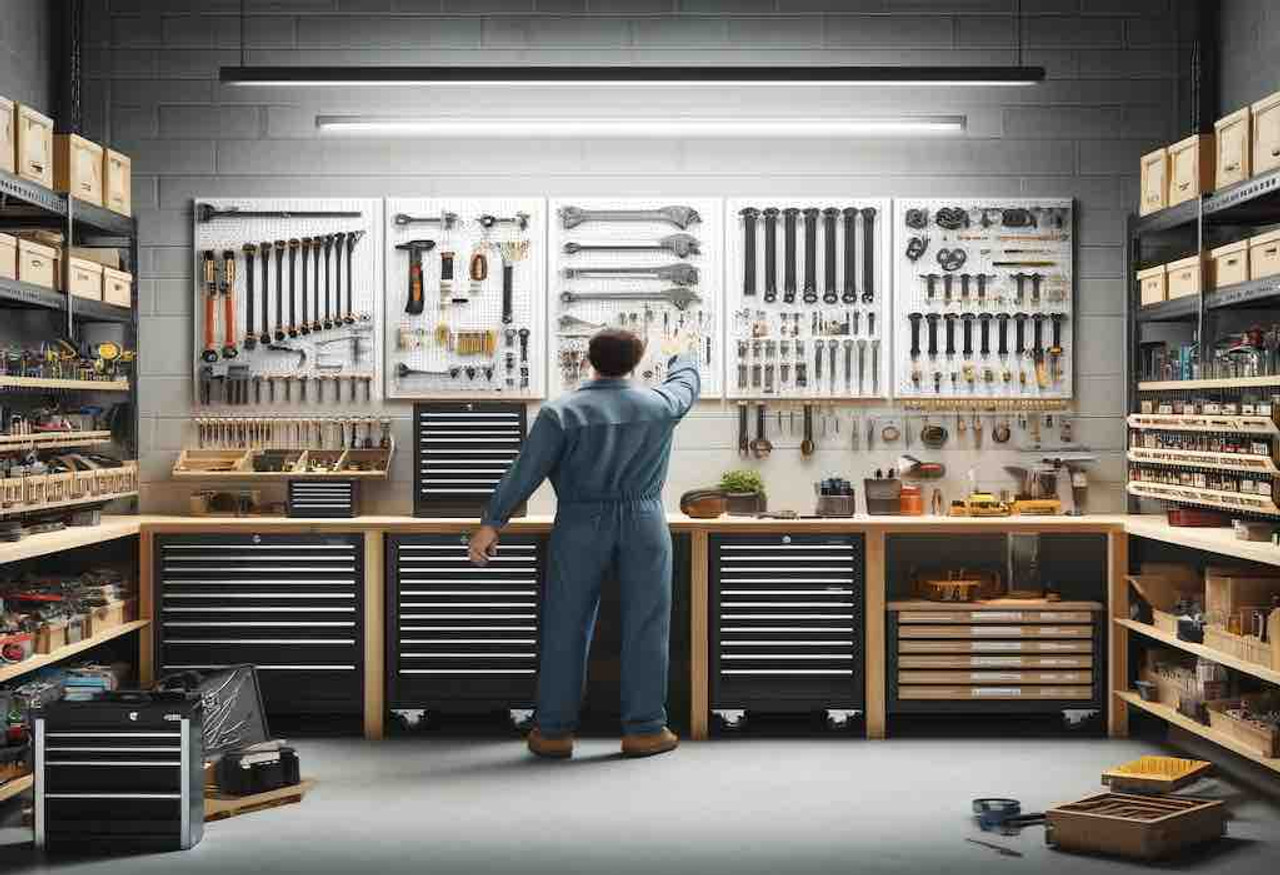
OH !! the perfect workshop, shadow boards full, tools all accounted for. This scenario is a pre-requisite in Food or Pharmaceutical companies and understandably so, but to somebody like myself, a time-served mechanical technician this presents different problems.
THE PERILS OF HAVING AN ENGINEERING MANAGER HAVING OCD (Compulsive Cleaning Disorder).
Back in the day (BITD) when I served my 4 year apprenticeship as a Mechanical Technician initially in a Toolroom, everyone had their own bench or even benches, Milling machinist near their miller, Turners near their lathes, cupboards full of specialised tools, drills and materials. Fitters/Technicians would strip and build machinery, pumps, gearboxes on their benches and spread out usually on some absorbent paper in the order that they had stripped that equipment down, usually pop marking each piece to a corresponding part. All went to plan, drawings were available if required to re-assemble parts. Now fast forward to the present times when every workshop has to be under 5s plans, and you get an Engineering manager that has OCD, you strip something down, pump. gearbox whatever, you lay it out , now you have checked the stores and they have the bearings but no seals, ah ok so they will be 3 days delivery, or we can send a taxi to pick them up. Your just finishing the night shift, then its your 2 or 3 days off. At first it doesn’t seem a problem, production get by but then Shit hits the Fan, you come back on your next shift…….. Manager has been around, cannot have benches untidy, throws all in to a red plastic box ( I’ve worked at a company that got rid of all blue plastic boxes and switched to red plastic boxes ) for cosmetic reasons !!
I’ve even worked at companies that threw all the components that were on benches in to a skip outside and were lost forever, in fact I worked at a famous Fish Finger manufacturer (part of Unilever) that when a VIP (big cheese) was coming on site cleaned up for about 2 weeks previous and threw all size change bits for the Lines that were stored in special made wooden trunks out and these ended up in the local scrapyards. It was only several days later when the production lines needed to change products and nothing could be found that Engineering Managers had to scour the scrapyards and pay a bit to retrieve them. But that’s just a negative side of the maintenance technician role, positives include having a great camaraderie on the shift. Usually all mix of Mechanical, Electrical and Multiskilled skills, you combine to keep the factory running with minimum downtime.
In between you will do (PPM’s) Planned Preventative Maintenance on the machinery.
These are typically Daily, weekly, Monthly 3 monthly, 6 monthly and annual checks…………… some can be just visual some require measuring tolerances, and other s replacing after a set number of running hours. Periodically say… on an annual survey a Service Engineer will come in if it is a specialised item of kit, Maybe a member of the shift will be placed with the Service Engineer to help progress the work and this enables the shift member to gain some valuable insight in to the running and maintenance of the equipment.
New Equipment and Machinery Installations
Another good source of getting good education on machinery is when you get tasked with helping with either a new installation or an upgrade on existing production lines. This is were you can pick the brains of the specialists of this equipment, never be afraid to ask any questions of them that you feel will be relevant to your needs, I have always found it best to ask the lower engineers who work on this equipment regularly and seem to know most of the faults that you may come across rather than the designers and sales engineers. This is also a good opportunity to observe what tools you need to use on those particular machines as the Service engineers/Installers usually carry all the tools that are relevant to their product or Lines.
TOOLBOX TALKS
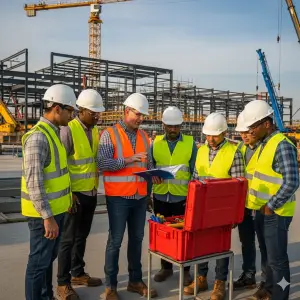
THE AIM OF A GOOD TOOLBOX TALK
In a workshop, a toolbox talk is a brief, informal safety meeting held before a task to discuss potential hazards and safe practices. It involves reviewing the specific job’s risks, the control measures, each person’s role, emergency procedures, and identifying any new concerns to ensure everyone understands the task and can work safely. These talks reinforce safety culture, keep knowledge fresh, and should be collaborative, encouraging active participation from all team members. Now sometimes a daily or even a weekly talk is not possible owing to production needs or personnel availability ( especially with shift workings). I have been involved were the management is very keen at first and encourage everyone to have their say, then some questions are asked…… I remember one topic being whether the latest phone devices would be assigned to the engineers as the production staff had got, this answer was not addressed and at every Toolbox talk this was brought up, eventually the talks were at further intervals or abandoned altogether. Some managers just like to showcase their latest graphics of KPI chart, don’t like to listen to the realities of the production and shop floor needs .I worked at one large UK Pharmaceutical company, they told me they followed the just-in-time method of spare parts stock. I remember a production line went down which I attributed to a burnt out motor, I stripped it off the machine and asked the shift supervisor to look for one on the system, “no we don’t keep on stock ” just ring this local company and they will deliver in the hour”. I called them ” ah your Company is on hold as they haven’t paid several Invoices ” the line was off 3 days, ah well all new systems have their faults.
The Key Elements of a TOOLBOX TALK are as follows
- Timing: Conducted before starting work on a specific task.
- Participants: Typically led by a supervisor or foreman, but can be led by anyone, and includes all relevant team members.
- Duration: Short and focused, usually 5-15 minutes.
- Content:
- Review of risks: Discuss hazards identified in the risk assessment for the specific task.
- Control measures: Go over the safety precautions and equipment needed.
- Roles and responsibilities: Clarify individual roles and responsibilities for the task and in emergencies.
- Emergency procedures: Review what to do in an emergency, including any “stop-the-job” triggers.
- Specific workshop concerns: Address any issues unique to the workshop, such as machinery operation, electrical safety, or chemical handling.
- Outcome:
- Confirms the team’s awareness of the risks and controls.
- Reinforces safe work practices and a strong safety culture.
- Can be documented with signatures to confirm understanding.
- Participation: Encourage questions and feedback to ensure complete understanding.
Training and Upskilling
A good and respected Company will continuously seek to update the skills of its existing workforce, this has many benefits for both sides, the Company because if you have been there a while it knows your strengths and weaknesses and can build on these for the benefit of their production lines or products. They may also see a potential higher management figure for the future. For you the worker its good to keep your options open and to spot courses or training that will either benefit you now or in the future. Companies booking a block of training tend to get preferred rates and times maybe more suitable for you to coincide with your shift responsibilities. So don’t be afraid to ask if you feel you need some up-skilling or to do a relevant extra safety course so you obtain a further level of competence.
- Outcome: