The New Industrial Evolution
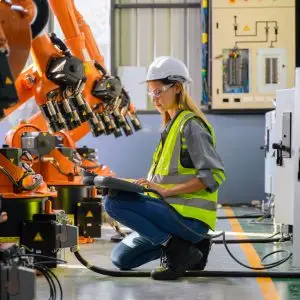
The person who feels that their present employment is in threat of termination at some point needs to seriously analyse their present skills and what they can offer to a new career pathway, plus what skills they need to acquire. They can acknowledge the “Soft Skills” that they possess and that their experience in project management or communication is vital when overseeing a team of technicians or managing a multi-million dollar automation rollout. The “Hybrid” Nature is not just about turning a wrench; it’s about understanding the logic controllers that make the wrench turn.
Bridging the Gap
- “bridge” skills—there are specific white-collar strengths that make the transition smoother.
- the “blue-collar tech” sector—where software meets physical machinery—is one of the most resilient niches emerging today.
- There are five high-demand manual-tech roles for 2026 that are perfect for career changers.
- The “Safety Net” Argument: Remember that while an AI can write a report, it cannot yet climb a ladder to replace a burnt-out optical sensor. This physical presence is their ultimate job security.

The future of career stability belongs to those who can bridge the gap between digital logic and physical reality. By leveraging your existing analytical skills and layering them with targeted technical certifications, you aren’t just escaping the reach of automation—you are becoming the person who commands it. In a world of infinite digital replicas, the ability to maintain, program, and optimize the physical machines that build our world is the ultimate unhackable career. There is also the possibility to go even deeper in to Robotics and enrol on a longer career path.
These are the five high-demand manual-tech roles for 2026 that are perfect for career changers:
Top 5 Manual-Tech Roles for Transitioning Professionals
| Role | Why it fits White-Collar Skills | The “Manual” Aspect |
| Robotics Maintenance Technician | Uses logical troubleshooting and data analysis to predict machine failure. | Hands-on repair, sensor calibration, and mechanical part replacement. |
| Automation Implementation Engineer | Relies on project management and client communication to deploy new systems. | Physically installing hardware, wiring “cobots,” and floor-mapping. |
| PLC (Programmable Logic Controller) Programmer | Closest to software/Excel logic; involves writing the “if-this-then-that” rules. | Testing code on physical machinery and adjusting wiring on control panels. |
| Robotics Safety & Compliance Specialist | Leverages legal or administrative experience in risk assessment and standards. | On-site inspections, installing light curtains, and physical safety testing. |
| Fleet Operations Manager (AMRs) | Uses logistics and operations experience to oversee warehouse robot “swarms.” | Manual “rescue” of stuck robots and physical battery/charging bay upkeep. |

How Best to make the Transition from White to Blue Collar
In 2026, the traditional “degree-first” mindset is rapidly being replaced by skills-based hiring. For white-collar professionals looking to pivot, this is a massive advantage: you don’t need a new four-year engineering degree to enter the robotics space. Instead, employers are looking for “stackable” credentials that prove you can handle the logic, data, and hardware of a modern automated floor.
Final Checklist for Your Transition:
Audit Your Skills: Map your “soft” office skills (logistics, logic, management) to the “hard” roles above.
Get Certified: Start with an introductory RMF or ARM-endorsed course to learn the vocabulary.
Visit the Floor: Reach out to local integration firms for a “ride-along” or site visit to see the hardware in person.
Update Your Resume: Pivot your narrative from “Data Analyst” to “Automation Systems Specialist.”
The Fast Track: 4–12 Week Industry Certifications
The most effective way to pivot is through OEM (Original Equipment Manufacturer) certifications. These are short, intensive, and carry immense weight because they prove you can work on the specific machines already on the factory floor.
FANUC Academy (UK & Europe): FANUC is the world leader in industrial robots. Their Academy offers modules ranging from 1–2 weeks (basic programming) to extended 12-week paths. For a white-collar professional, focusing on their Robotic Educational Packages or Simulation Software (ROBOGUIDE) allows you to manage automation projects without needing to be a mechanical repairman.
Siemens Mechatronic Systems Certification (SMSCP): Siemens is the backbone of European automation. Their Level 1 (Assistant) or Level 2 (Associate) certifications can often be completed in a few months via partner colleges in the UK and Germany. They focus on “System Thinking”—perfect for a professional who already understands business processes.
Universal Robots (UR) Academy: If you are interested in Cobots (collaborative robots that work alongside humans), UR offers a blended learning approach. You can start with free online modules and finish with a week of hands-on “Core” and “Advanced” certification.
Strategic “Pivot” Credentials (ARM & SME)
While OEM certs prove you can use the tools, these organizations prove you understand the industry:
ARM Institute (Advanced Robotics for Manufacturing): While US-based, their RoboticsCareer.org platform and “ARM-Endorsed” benchmarks are the global gold standard for 2026. Look for European programs that align with their Robotics Specialist or Integrator pathways—these are designed for people moving from office roles into automation management.
- SME (Society of Manufacturing Engineers): Their Robotics in Manufacturing Fundamentals (RMF) is a high-impact, short-term credential. It’s designed specifically to validate the “Foundational Knowledge” required to work in an automated environment, making it an ideal “bridge” for a white-collar CV.
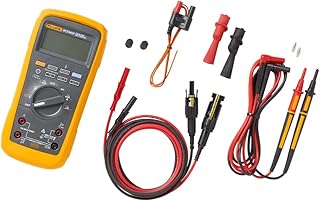
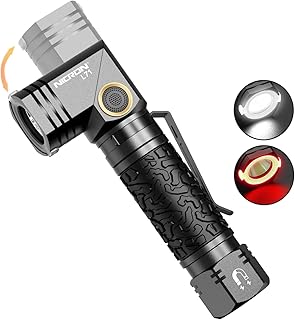
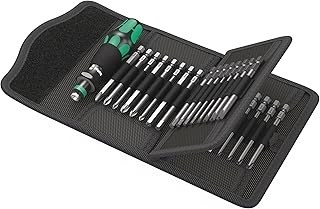
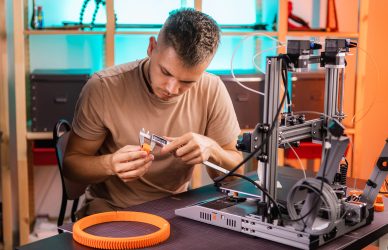
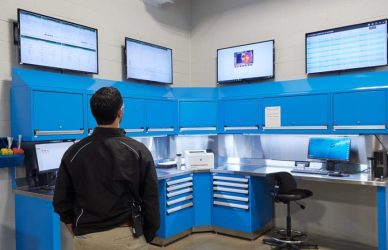
So as we can see from the 2 upper images you aren’t leaving your “white collar” status behind; you are simply adding a “high-tech” layer to your existing expertise. One of the other growth areas of the Robotics age is right at the intersection of AI and physical jobs, the breakdown of how humanoid robots are being “trained” by human supervisors is a fantastic real-world example of how these “manual” jobs are becoming more high-tech.
In fact in specific industries (logistics, manufacturing) w the demand for human-robot collaboration is growing fastest this year.
A further avenue to explore is the very good STEM Learning initiative in the UK and throughout Europe, they are looking for Ambassadors, Mentors and Volunteers in this exciting project to educate children in the 4 subjects of Science, Technology, Engineering and Mathematics. It emphasises hands-on, real-world problem-based learning rather than isolated subjects. The aim is to develop skills like critical thinking, creativity, teamwork and Digital literacy. You can find more details at www.stem.org.uk or there is another blog post that we have produced and is in the link above.