
10 Current Trends that will Augment the Modern Workforce in Robotics.
Robotics and Automation is a high-growth sector in 2026, and our focus is specifically on utilising skilled labour (rather than just replacing it). We will certainly explore the latest 2026 Trends of “Augmentation”, “Collaboration”, and “Reskilling”. In fact we will further explain the 10 Trends that will augment the modern workforce.
1. Collaborative Robotics (Cobots)
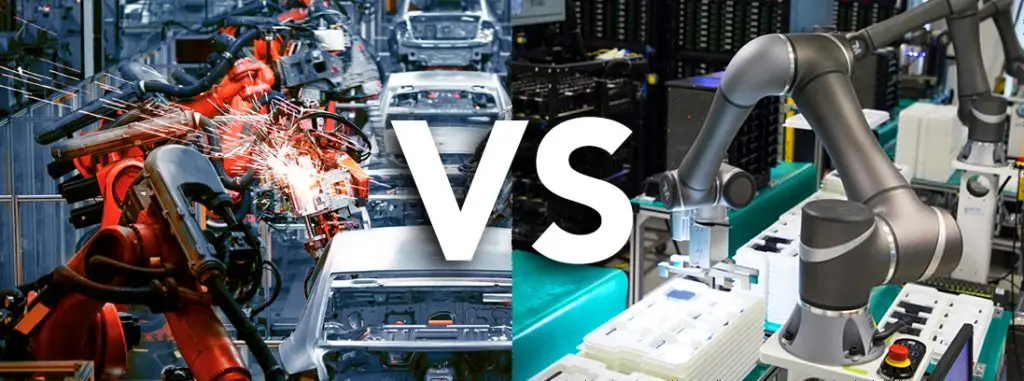
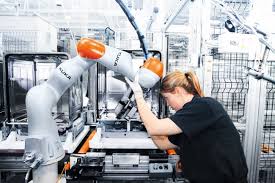
Collaborative robots, or cobots, represent a fundamental shift in automation. Unlike traditional industrial robots that operate behind safety cages, cobots are designed to share a workspace with humans, functioning more like a high-tech power tool than a replacement for a worker. By 2026, cobots have become the “workforce multiplier “, focusing on augmenting human capability in three primary ways
1. Physical Augmentation (The “Ergonomic Shield”)
Cobots take over the “3 Ds”: tasks that are Dirty, Dull, or Dangerous.
Heavy Lifting: In logistics, cobots handle palletizing and heavy material transfer, preventing musculoskeletal injuries.
Precision Fatigue: In electronics, they manage repetitive micro-assembly or screw-driving that would lead to human strain and errors over an eight-hour shift.
Machine Tending: They handle the repetitive loading and unloading of CNC machines, allowing one human operator to oversee four or five machines simultaneously.
2. Cognitive Offloading
Modern cobots are increasingly integrated with Physical AI and computer vision. This allows them to:
Quality Inspection: Use high-resolution cameras to spot microscopic defects faster than the human eye.
Dynamic Adaptation: Adjust their path in real-time if a human moves into their workspace, thanks to sensors like Power and Force Limiting (PFL) and Speed and Separation Monitoring (SSM).
Simplified Programming: Most 2026 models use “hand-guided” teaching, where a worker physically moves the robot arm to show it a path, rather than writing complex code.
3. Economic Resilience for SMEs
The rise of Robots-as-a-Service (RaaS) and lower hardware costs have made cobots accessible to Small and Medium Enterprises (SMEs). Instead of a million-dollar overhaul, a shop can deploy a single cobot for a specific bottleneck, such as welding or packaging, allowing the existing staff to focus on higher-value roles like process optimization and custom craftsmanship.
Key Distinction: While traditional robots prioritize speed and volume, cobots prioritize safety and flexibility. They don’t replace the worker; they replace the “robot-like” parts of a worker’s job.
By 2026, the cobot market has matured into a mix of “pioneers” who invented the category and “industrial titans” who have adapted their heavy-duty tech for human-centric spaces.
Here is a roundup of the best brands currently leading the workforce augmentation charge:

SUPERAGENCY by REID HOFFMAN & GREG BEATO [2025]
Instead of the usual "robots are taking over" gloom, this book explores how technology can amplify human agency. It’s a great philosophical anchor for the "augmentation" theme, suggesting that robots unlock human creativity rather than stifling it.
1. Universal Robots (The Gold Standard)
The Danish company that started it all. UR remains the market leader because of its massive ecosystem, UR+, which offers thousands of “plug-and-play” grippers, sensors, and software.
Best For: SMEs, high-mix/low-volume production, and beginners.
Key Models: The UR20 and UR30 are the 2026 heavy-hitters, offering high payloads (up to 30kg) while remaining slim enough to fit into tight assembly lines.
2. FANUC (The Reliability King)
Known for their “Yellow Robots” in car factories, FANUC’s CRX series is built for extreme durability. They are famous for being “maintenance-free” for up to 8 years.
Best For: Harsh industrial environments (dust, oil) and long-term reliability.
Standout Feature: They use a tablet-based “Drag & Drop” programming interface that is incredibly intuitive for floor workers who aren’t coders.
3. ABB (The Precision Expert)
ABB’s GoFa and SWIFTI series focus on speed and pinpoint accuracy. While most cobots are slower than industrial robots for safety, ABB’s models use advanced laser scanners to run at high speeds when humans are away and slow down only when someone approaches.
Best For: Electronics assembly and laboratory automation.
Standout Feature: RobotStudio, which allows you to perfectly simulate the robot’s work in a digital twin before buying the hardware.
4. Doosan Robotics (The “Physical AI” Leader)
A rising power from South Korea, Doosan cobots are known for having high-end torque sensors in all six joints, making them incredibly sensitive to human touch.
Best For: Delicate tasks like skin-polishing or medical assistance.
Innovation: Their 2026 Dart-Suite software integrates “Physical AI,” allowing the robot to learn new tasks by watching a human via a camera.
5. Techman Robot (The “Eyes” of the Industry)
Techman (part of Quanta) was the first to build integrated vision directly into the robot’s “wrist.”
Best For: Quality inspection and pick-and-place where parts aren’t always in the same spot.
Advantage: You don’t need to buy or calibrate a separate camera system; it’s built-in.
Comparison at a Glance (2026 Models)
| Brand | Strengths | Typical Payload | Best Industry |
| Universal Robots | Largest ecosystem | 3kg – 30kg | General Mfg / Logistics |
| FANUC | Durability | 5kg – 35kg | Automotive / Metal |
| ABB | Speed & Precision | 5kg – 12kg | Electronics / Labs |
| Doosan | Sensitivity / AI | 5kg – 25kg | Service / Fine Assembly |
| Techman | Built-in Vision | 5kg – 25kg | Quality Inspection |
2. Human-Robot Collaboration (HRC)
Human-Robot Collaboration (HRC) represents a transformative shift in industrial and service environments, moving away from traditional setups where robots are confined to safety cages. In this shared workspace, humans and robots work concurrently on tasks, leveraging their unique strengths: the cognitive flexibility, dexterity, and problem-solving skills of humans, and the precision, endurance, and physical strength of robots.
Modern HRC relies on advanced sensor fusion, computer vision, and machine learning to ensure safety and seamless interaction. Unlike classic automation designed for high-volume repetition, collaborative systems are built for flexibility, allowing for “cobots” (collaborative robots) to assist in complex assembly, heavy lifting, or intricate medical procedures while responding dynamically to human presence. There are strict regulations and safety standards, such as ISO 10218, that govern these collaborative environments and must be adhered to.
Key Pillars of HRC
| Feature | Description |
| Shared Workspace | Both entities operate in the same physical area without physical barriers. |
| Safety Systems | Uses “Power and Force Limiting” (PFL) and “Speed and Separation Monitoring” (SSM) to prevent injury. |
| Synergy | Combines human intuition with robotic repeatability to increase overall efficiency. |
3. Robotics Reskilling & Upskilling
Robotics reskilling and upskilling for blue-collar workers have evolved from a defensive “job-saving” measure into a strategic career advancement path. As of 2026, the focus has shifted toward “middle-skill” roles, where traditional mechanical expertise—like welding, machining, and logistics—is augmented with digital literacy. Rather than being replaced, frontline workers are transitioning into roles such as Automation Technicians, Cobot Supervisors, and Predictive Maintenance Specialists. This transformation relies on accessible, hands-on training models like Registered Apprenticeships and VR-based simulations, which allow workers to master Programmable Logic Controllers (PLCs) and robot “teaching” without requiring a four-year degree.
The 2026 Shift: Industry data shows that workers in “AI-augmented” roles are seeing an average 25% wage uplift compared to traditional manual labour roles, as companies prioritise internal talent over external hiring to bridge the widening technical skills gap.
4. Physical AI
Physical AI (also known as Embodied AI) is the “brain” that allows a robot to move out of the digital screen and into the chaotic real world. While traditional AI (like ChatGPT) processes text or pixels, Physical AI understands the laws of physics: gravity, friction, weight, and spatial relationships. In the robotics industry, this marks the transition from automation (robots following a fixed script) to autonomy (robots that can reason and adapt). A robot with Physical AI doesn’t just see a cup; it understands that the cup is brittle, knows how much force is needed to lift it without crushing it, and can adjust its grip in real-time if the cup starts to slip.
Physical AI vs. Traditional Robotics
| Feature | Traditional Robotics (Pre-2024) | Physical AI (2026 Standard) |
| Logic | Rule-based (If-Then statements) | Neural-based (Learned behaviours) |
| Environment | Controlled & Fenced (Cages) | Unstructured & Shared (Open floors) |
| Adaptability | Stops if an obstacle appears | Re-routes or nudges obstacles aside |
| Training | Manual coding by engineers | Large-scale simulations (Sim-to-Real) |
Why It’s the “Big Story” of 2026
The breakthrough in 2026 is the maturity of Vision-Language-Action (VLA) models. These allow a worker to give a robot a command in plain English (e.g., “Find the damaged box and move it to the inspection bin”), and the Physical AI translates that sentence into a sequence of motor movements. This removes the need for complex programming and allows robots to be deployed in “brownfield” facilities (old factories) without expensive floor redesigns.
Industry Context: Major players like NVIDIA and Tesla are treating Physical AI as the next frontier, shifting the focus from the “body” (hardware) to the “foundation model” (the intelligence) that drives it.
5. Agentic Workflows in Manufacturing
In 2026, Agentic Workflows represent the evolution from “robots that follow rules” to “robots that achieve goals.” While traditional automation relies on rigid, if-then logic (which breaks if a part is slightly out of place), agentic workflows use AI agents that can reason, plan, and self-correct across multiple steps. In a manufacturing context, this means the system doesn’t just flag a problem; it autonomously investigates the cause, checks spare part inventory in the ERP, and updates the maintenance schedule—all before a human even steps onto the floor.
Real-World Impact on the Shop Floor
Self-Healing Supply Chains: If a shipment of raw materials is delayed by a storm, an agentic system doesn’t just wait for a human to see the alert. It proactively scans for alternative suppliers, calculates the cost-impact of switching, and presents the manager with a “ready-to-approve” solutions.
Autonomous Maintenance: When a sensor detects a vibration anomaly in a CNC machine, the agentic workflow triggers a diagnostic agent to review the machine’s history, a logistics agent to verify part availability, and a scheduling agent to find the least disruptive time for a repair.
Instant SOP Generation: In 2026, agents are being used to watch video of an expert technician and automatically generate Standard Operating Procedures (SOPs) or AR training overlays, effectively digitizing “tribal knowledge” that used to be lost when veterans retired.
Key Trend: Industry leaders are moving away from “Pilot Purgatory” (testing small AI tools) and toward Agentic Infrastructure, where the entire factory has a “digital nervous system” capable of making low-stakes operational decisions without constant supervision, meaning managers are looking for “Self-Correcting” factories, rather the system can make decisions rather than just following scripts, requiring a skilled operator to “supervise” the AI.
6. Industrial Retrofitting
Industrial retrofitting is the process of adding modern technology—sensors, controllers, and communication modules—to existing “legacy” machinery to give it the capabilities of a smart factory without the massive capital expense of a full replacement. In 2026, this is the primary strategy for small-to-mid-sized manufacturers looking to stay competitive in an AI-driven market. Many companies want to add automation to their existing machines. This attracts a practical, budget-conscious audience.
The 4 Key Aspects of Modern Retrofitting
1. Connectivity & Data Extraction (The “Digital Twin” Bridge)
The first step is moving from “dark” machines to connected ones. This involves installing IoT Gateways and edge computing devices that translate old analogue signals or proprietary serial data into standardized protocols like OPC UA or MQTT. This allows a 20-year-old hydraulic press to communicate with modern cloud-based analytics.
2. Sensing & Perception Upgrades
Retrofitting often involves adding a “sensory layer” to “dumb” equipment:
Vibration & Heat Sensors: For predictive maintenance, identifying failures before they happen.
Computer Vision: Adding cameras to old assembly lines to perform automated quality inspections that previously required a human eye.
3. Control System Modernization
This replaces or augments aging PLCs (Programmable Logic Controllers). By integrating modern controllers, engineers can implement Agentic Workflows or Physical AI on machines that were originally designed for simple, repetitive tasks. This allows for “dynamic set-pointing,” where the machine adjusts its own speed or pressure based on real-time environmental data.
4. Safety & Collaboration Integration
Retrofitting is the fastest way to turn a traditional industrial robot into a Collaborative Robot (Cobot). By adding external safety skins (tactile sensors) or area scanners (LiDAR), a caged robot can be “uncaged,” allowing it to work safely alongside humans by automatically slowing down or stopping when someone enters its proximity.
Retrofit vs. Replace: A Quick Comparison
| Factor | Industrial Retrofit | Full System Replacement |
| Capital Cost | Lower (20-40% of new) | High (100%) |
| Downtime | Minimal (Incremental) | Significant (Weeks/Months) |
| Learning Curve | Low (Staff knows the machine) | High (New interface/mechanics) |
| Longevity | Extends life by 5-10 years | Resets the clock (15-20 years) |
Just a note to look out for, in 2026 “Green Retrofitting” has become a major sub-trend, where companies add high-efficiency motors and power-recovery drives to old equipment to meet new carbon-neutrality regulations.
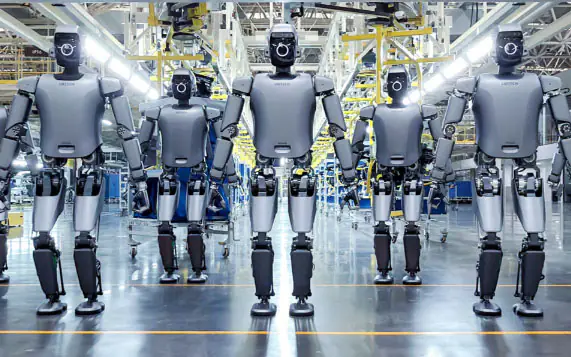
7. Humanoid Labour Augmentation
Humanoid Labour Augmentation (HLA) is the strategic use of human-shaped robots to work alongside or in place of humans in environments originally designed for people. Unlike traditional industrial robots—which are often bolted to a floor inside a safety cage—humanoid augmenters are mobile, versatile, and built to navigate the world just as we do.
Core Concepts of HLA
The goal isn’t necessarily to replace every worker, but to “augment” the workforce by offloading the “3 Ds”: tasks that are Dull, Dirty, or Dangerous.
Morphological Compatibility: Because these robots have two legs, two arms, and hands, they can use existing infrastructure (stairs, doorways) and tools (wrenches, carts) without companies needing to redesign their entire factories.
General-Purpose AI: Modern humanoids use “End-to-End” learning. Instead of being programmed with rigid code, they observe human movements and use neural networks to figure out how to pick up a box or sort laundry.
- Human-Robot Collaboration (Cobotics): Many systems are designed to sense human presence and adjust their speed or force to ensure safety, allowing a person and a robot to share a workstation.
Key Players & Tech
The industry has shifted from “science experiments” to “commercial deployments” very quickly:
| Entity | Notable Project | Focus |
| Tesla | Optimus (Gen 2) | Large-scale manufacturing and autonomous repetitive tasks. |
| Figure AI | Figure 02 | Integration with BMW production lines for precision parts handling. |
| Boston Dynamics | All-Electric Atlas | Extreme mobility and heavy lifting in complex environments. |
| Apptronik | Apollo | “Friendly” aesthetics for logistics and warehouse retail. |
Why Now?
We are currently seeing a “perfect storm” of three technologies that have finally made HLA viable:
Actuator Density: Motors are now small and powerful enough to mimic human muscle strength.
Battery Density: Robots can now operate for 4–8 hours on a single charge.
Computer Vision: Advanced sensors allow robots to map 3D spaces in real-time and recognize thousands of different objects.burgers, then mop the floor, then unload a truck
- The Big Shift: We are moving from Special-Purpose Robotics (a machine that only flips burgers) to General-Purpose Robotics (a machine that can flip burgers, then mop the floor, then unload a truck
8. Digital Twin Simulation
In the robotics industry, Digital Twin Simulation is the process of creating a high-fidelity, virtual counterpart of a physical robot and its environment that is synchronized via real-time data. While a standard “simulation” is often a one-time test during the design phase, a Digital Twin is a living model that evolves alongside the physical robot throughout its entire lifecycle
1. The Core Architecture: “Sim-to-Real”
The most powerful application of this tech is Sim-to-Real transfer. Engineers train a robot’s AI in a digital twin environment—where it can “practice” a task millions of times in a few hours without breaking any physical parts—and then “zero-shot” or “few-shot” transfer that intelligence to the real-world robot.
2. Key Differences: Simulation vs. Digital Twin
It is a common mistake to use these terms interchangeably. Here is how they differ in a professional robotics context:
| Feature | Standard Simulation | Digital Twin |
| Data Flow | One-way (User–> Model) | Two-way (Robot <— Virtual Model) |
| Connectivity | Offline / Static | Real-time / Persistent |
| Purpose | To predict what could happen | To monitor/optimize what is happening |
| Lifecycle | Primarily Design & Prototyping | Operations, Maintenance, & Training |
3. Industry Benefits in 2026
Predictive Maintenance: Sensors on the physical robot (temperature, vibration, motor torque) feed the twin. The twin uses physics-based models to predict exactly when a joint will fail before it actually does.
Edge Case Testing: You can safely simulate “accidents”—such as a human walking into the robot’s path or a power surge—to see how the robot’s safety protocols react without risking lives or equipment.
Synthetic Data Generation: For AI-driven robots (like humanoids), the digital twin generates “synthetic” visual data to train the robot’s computer vision on rare objects or lighting conditions that are hard to find in the real world.
Technical Note: Modern digital twins often utilize Universal Scene Description (OpenUSD) or platforms like NVIDIA Omniverse to ensure that the physics (gravity, friction, collision) in the virtual world perfectly matches the physical reality.
9. Precision Robotic Machining
Precision Robotic Machining (PRM) is the use of robotic arms—rather than traditional, fixed-base CNC (Computer Numerical Control) machines—to perform subtractive manufacturing tasks like milling, drilling, grinding, and deburring. While traditional CNC machines are the gold standard for “micron-level” rigidity, PRM is rapidly changing the landscape by offering a level of flexibility and reach that fixed machines simply cannot touch.
Why the Shift?
In traditional manufacturing, you bring the part to the machine. In robotic machining, the robot can bring the tool to the part, or manipulate the part itself in 3D space.
Reach & Geometry: A 6-axis (or 7-axis) robot arm can reach around complex curves and hollows that a 3-axis or 5-axis CNC bed cannot access.
Versatility: One robot can be reprogrammed in minutes to switch from milling an automotive dashboard to polishing a turbine blade, whereas reconfiguring a traditional CNC cell often requires physical downtime.
- Cost-Effectiveness: For large-scale prototypes (like car seats or wind turbine blades), buying a giant CNC machine is often cost-prohibitive. A robot mounted on a linear track offers a much cheaper alternative with sufficient precision for these applications.
The “Precision” Trade-off
It is important to understand the nuance here: Robots are generally not as rigid as CNC machines.
How Modern PRM Solves for Accuracy
The industry is currently overcoming the “low stiffness” challenge of robots using several clever software and hardware tricks:
Compliance Compensation: Since robot arms flex under cutting force, modern software predicts this deflection in real-time and adjusts the tool path to compensate.
External Metrology: Laser trackers or vision systems constantly monitor the tool tip in 3D space, feeding positional corrections back to the robot controller so it can “self-correct” during the cut.
Active Vibration Dampening: Robots use signals to their motor torque commands to “cancel out” resonance or micro-vibrations, allowing for smooth finishes that were previously impossible
10. Robotics-as-a-Service (RaaS)
Robotics-as-a-Service (RaaS) is a business model that allows companies to lease robotic hardware and software through a subscription or pay-per-use arrangement. Think of it as “SaaS for the physical world”. Instead of a massive $100,000+ upfront investment (CapEx), a business pays a monthly fee (OpEx) that typically covers the robot, the software, maintenance, and cloud updates.
1. The Financial Logic: CapEx to OpEx
The primary driver of RaaS is the “democratization” of automation. Historically, only giants like Amazon or Toyota could afford robotics.
Lower Barrier to Entry: Small and medium enterprises (SMEs) can automate a packing line for a few thousand dollars a month rather than a six-figure loan.
Risk Mitigation: If the business model changes or a specific robot doesn’t perform as expected, the company isn’t stuck with a “six-figure paperweight.” They simply end the subscription.
Predictable Scaling: A warehouse can “rent” 10 extra mobile robots for the November–December holiday rush and return them in January.
2. Market Analysis (2026 Outlook)
As of early 2026, the RaaS market is experiencing an explosion in growth, driven by labour shortages and the maturity of Physical AI.
| Metric | Estimated Value (2026) | Trend Direction |
| Global Market Size | $\approx$ $3.3$ Billion | Upward (22% CAGR) |
| Installed Units | $1.3$ Million | Exponential Growth |
| Dominant Sector | Logistics & Material Handling | Expanding into Healthcare |
3. Key Components of a RaaS Agreement
Unlike a standard lease, RaaS is a “managed service.” The provider (e.g., Locus Robotics, Figure, or Apptronik) usually retains ownership and responsibility for:
The Hardware: The physical robot and sensors.
The “Brain”: Continuous cloud-based AI updates that improve the robot’s performance over time.
Uptime Guarantee: Most contracts include an SLA (Service Level Agreement) where the provider fixes or replaces a broken robot within 24 hours.
4. Critical Challenges
It’s not all “plug-and-play.” Companies adopting RaaS in 2026 face three main hurdles:
Integration Complexity: Getting a “Service” robot to talk to an old, legacy warehouse management system (WMS) is still a major technical bottleneck.
Data Privacy: Because RaaS robots are cloud-connected, they are constantly uploading video and spatial maps of a factory. This raises significant cybersecurity concerns for sensitive industries.
The “Subscription Trap”: Over a 5-to-10-year period, RaaS can actually be more expensive than buying a robot outright if the task is highly stable and permanent.
INDUSTRY INSIGHT
We are seeing a shift toward “Outcome-Based Pricing”, instead of paying per robot, some companies now pay per “pick” or per “square meter cleaned,” aligning the cost directly with the value produced.
Conclusion: The New Social Blueprint
Ultimately, the rise of robotics in 2026 represents more than a technological upgrade; it marks a fundamental shift in the social contract of work. As robotics transition from isolated tools to collaborative partners, society will likely see a dual-edged transformation: a significant reduction in workplace injuries and physical burnout, alongside a “skills premium” that rewards those capable of high-level human-machine orchestration. While concerns regarding displacement persist, the true societal effect is the elevation of the “skilled” label itself—moving away from repetitive manual labour toward roles defined by critical judgment, emotional intelligence, and technical fluency. In this new landscape, the measure of a thriving society will no longer be how many tasks we can automate, but how effectively we use that automation to restore human dignity and purpose to the modern workforce.